








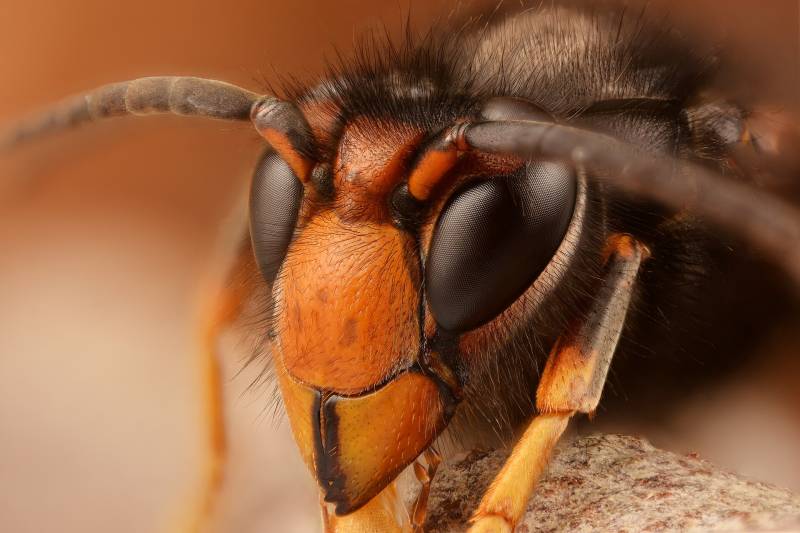














The spread of Asian hornets across Spain is proving difficult to stop, with the invasive insects now being detected in areas where they were previously uncommon.
Experts say there is little chance of completely eradicating the species once it becomes established. Instead, efforts are likely to focus on controlling local populations and protecting beehives and other vulnerable areas.
The Asian hornet, known scientifically as Vespa velutina, has become particularly established in northern Spain, including Galicia, Navarra and Cataluña. It has spread from the north towards the Mediterranean, while another invasive species, the oriental hornet, is being detected in new areas in the south of Spain.
The Asian hornet tends to establish itself more easily in areas with a mild, humid climate. However, experts believe the insects may be adapting to warmer Mediterranean conditions through behavioural or genetic changes.
There is also another way they can travel. Fertilised queens can spend the winter hidden among pallets, vehicles and building materials, meaning the movement of goods can unintentionally transport the species to new areas.
Experts point to the large population already established in northern Spain, which continuously disperses the species towards the south and Mediterranean coast.
The result is that sightings are now being reported in places where the insects were not previously expected.
Recent cases include Ibiza and Mallorca, where both Asian and oriental hornets have been detected. Six invasive hornet nests were removed in Mallorca, including four Asian hornet nests and two belonging to the oriental species.
For beekeepers, the spread is particularly worrying. Asian and oriental hornets prey on honey bees and can cause such stress around hives that worker bees stop leaving to collect food.
The bees then use their own honey reserves, increasing the risk of colonies collapsing. In areas of northern Spain where Asian hornets are already established, colony mortality has been estimated at around 30%.
The impact can go beyond honey production. One beekeeper described having to pollinate courgettes by hand with a paintbrush because there were not enough bees.
The insects can also feed on fruit and other sugary substances, bringing them into gardens, homes and businesses.
Experts say climate change, urbanisation and the constant movement of goods linked to global trade are helping invasive species establish themselves in new territories.
Trying to remove every hornet nest is considered practically impossible once a population is firmly established. Local action can, however, reduce the pressure on beekeeping and populated areas.
For now, the advice is to focus on finding and removing active nests and limiting the impact of a species that experts say is unlikely to disappear.
Image: C/C Gilles San Martin
 Control de Plagas Levante works in all areas of the home, from kitchens and bathrooms to bedrooms, terraces and gardens, using professional methods tailored to each situation.