













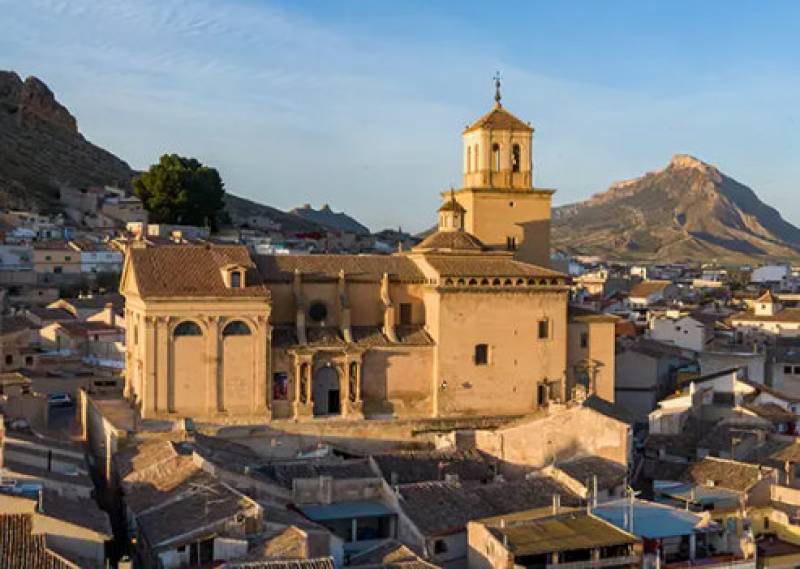
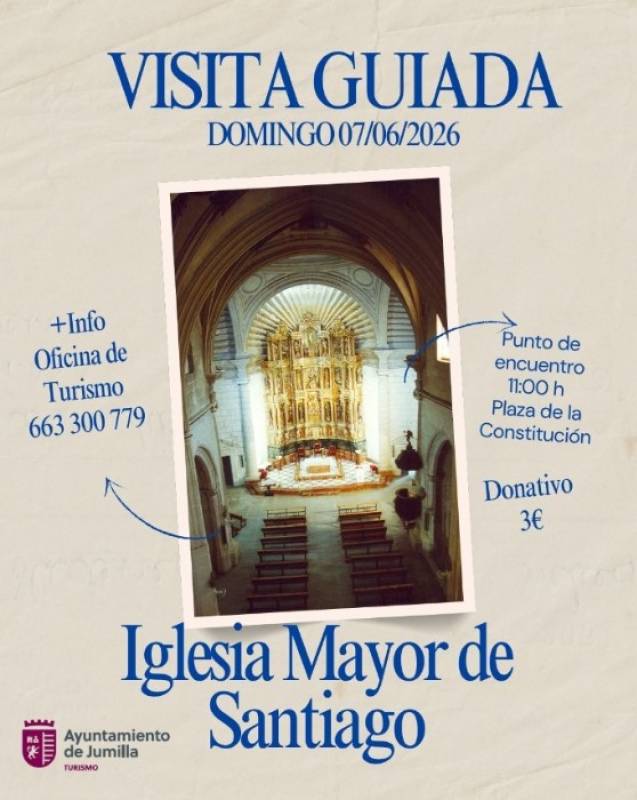
 There is a rare chance on Sunday 7th June to enjoy a guided tour (in Spanish) of the majestic church known as the Iglesia Mayor de Santiago in the centre of Jumilla, beginning at 11.00 in the Constitución and including not only the building itself but also the immediate surroundings.
The church dedicated to the Apostle Santiago is probably the most iconic building in the town itself (although it is overshadowed by the castle that stands above), and although construction began as early as the 15th century the truth is that it could still be viewed as “work in progress” until well into the 19th.
The church can even be seen on the poster advertising the medieval market which is being held in Jumilla during the Moors and Christians festivities from 6th to 14th June!
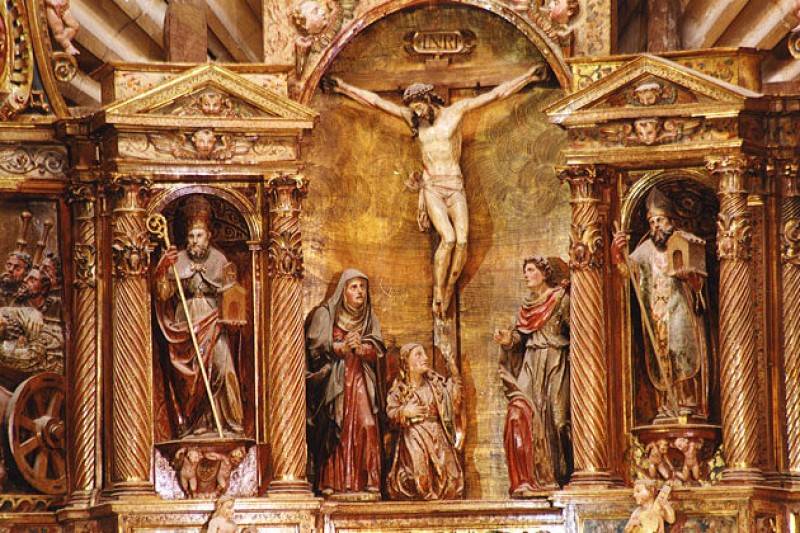 As a result it contains a compendium of different architectural styles: the main nave and side chapels, which are reported to have been started between 1447 and 1454, are representative of the late Gothic trends of the 15th century, while in the main chapel the work of architect Jerónimo Quijano shows many of the influences of the Renaissance. The dome over this area was the first of its kind in the Region of Murcia, and also from the 16th century is the altar screen, which depicts the pilgrimage of Santiago from the Holy Land to Spain.
The 16th century also saw the addition of the old Sacristy underneath the tower and the main entrance on the southern side of the building, which is in the form of a triumphal arch.
 In the early 18th century work began again with the addition of the first two levels of the tower which can still be seen today, as well as the Communion Chapel and the new Sacristy. The 19th century then gave rise to the choir, which is separated from the rest of the church by a superb piece of wrought ironwork, and in which the remains of an early-19th-century organ can still be seen despite it having been damaged during the Civil War.
Among the religious works of art housed in the church are three works by Ignacio Pinazo, Santos de la Hera’s Cristo Crucificado de la Expiación and various items of sculpture related to the life of Christ which are featured in the annual Easter processions.
Further information is available from the tourist office of Jumilla (Plaza del Rollo, 1, tel. 663 300779, email oficinaturismo@jumilla.org) and bookings can be made online here. A payment of just 3 euros is required (to be donated to church maintenance and restoration funds).
For more local news, events and visiting information please go to the home page of Jumilla Today.
The tourist office in the centre of Jumilla is easily found by driving straight into the centre of the town along the Avenida de Murcia and following the signposts. The tourist office is alongside the Parque de Don Albano Martínez Molina, where there are a number of parking spaces.
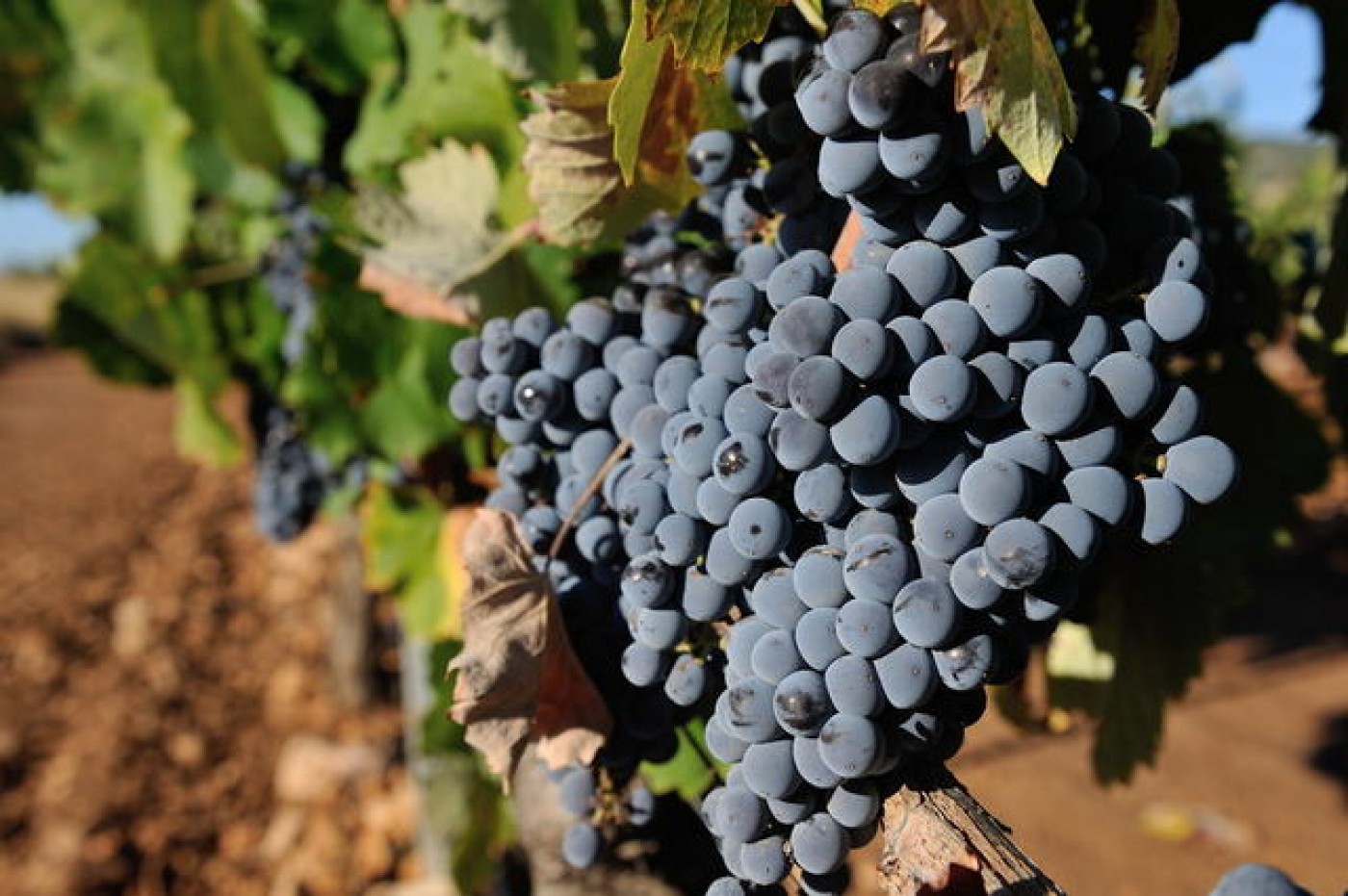
Jumilla, in the north of the Region of Murcia, has become internationally famous over recent decades due to the quality of the wines produced in the municipality, and wine tourism has begun to attract visitors from other parts of Spain and the rest of Europe.
The tourist office is happy to provide a range of maps and leaflets showing the different bodegas which can be visited within the municipality. Some of these form part of the Rutas del Vino de Jumilla, the Jumilla wine route, and can either be visited as a guided tour or sell their produce directly to the public.(see feed below for more details)
However, the town and the surrounding countryside have plenty of other attractions for visitors, and the popularity of Jumilla wines is leading more and more people to discover other facets of the tenth largest municipality in Spain.
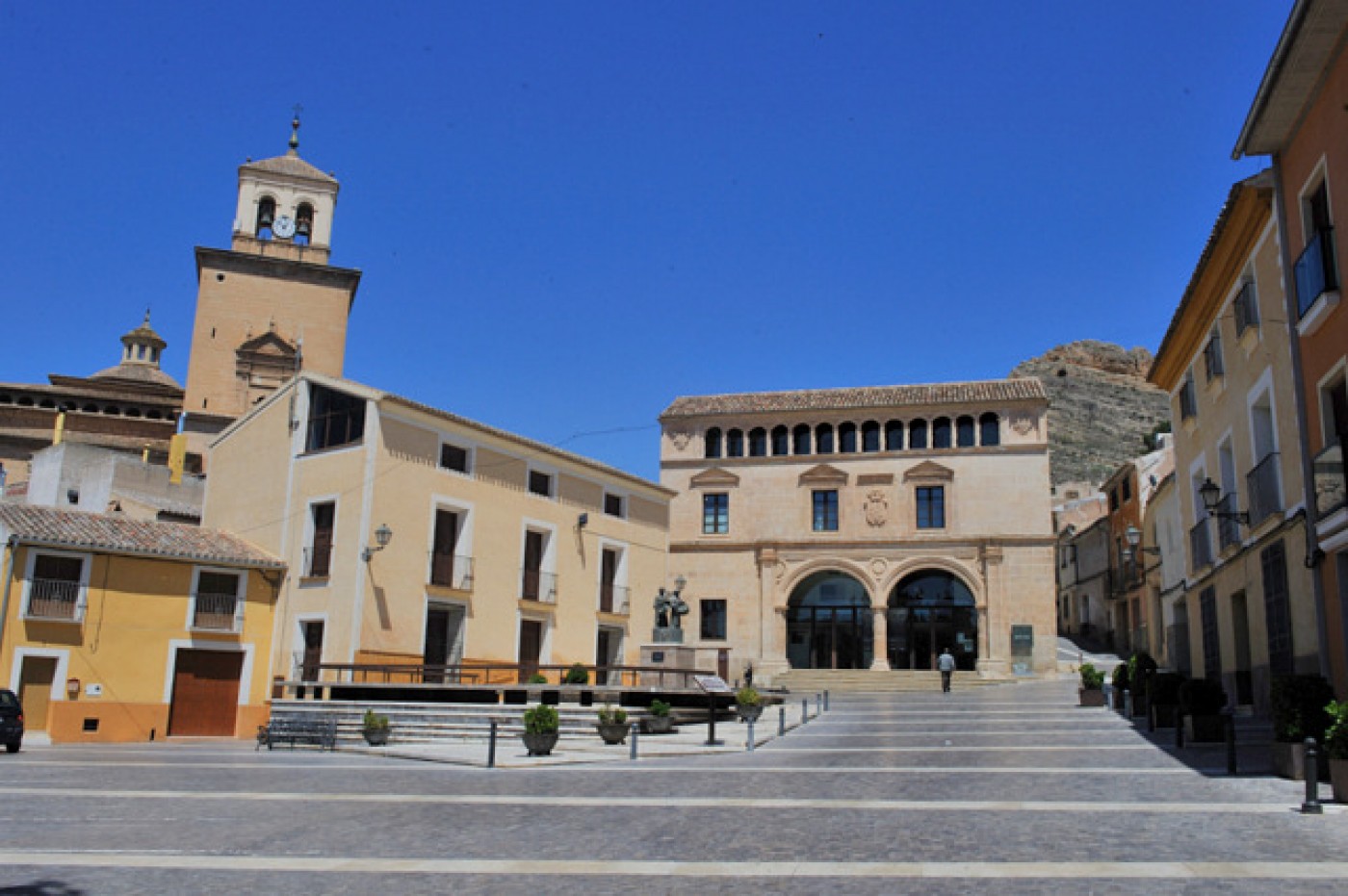
These include the spectacular countryside and birdlife in the Sierra del Carche, the historic remains which range from cave paintings and a Roman mausoleum to the castle, the Iglesia de Santiago, the Town Hall and the Teatro Vico, and the gastronomy: rich stews are accompanied not only by the wines of the area but also by Jumilla pears, which also enjoy Denomination of Origin status.
Tourism in Jumilla is not as seasonal as it is in the coastal areas of the Region of Murcia, but the town is at its liveliest during the fiestas in Holy Week and the August Fair, which incorporates the grape harvest celebrations and the Moors and Christians parades.
The Altiplano of the Region of Murcia, which consists of the municipalities of Jumilla and Yecla, is only just over an hour by car from the Mar Menor, Cartagena, Mazarrón, Torrevieja and Alicante, and anyone wishing to visit real inland Spain and world-class wineries is advised to include Jumilla in their schedule.
Summer
Tuesday to Friday from 10am to 2pm
Saturday and Sunday 10am to 2pm
Monday closed
Winter
Tuesday to Friday from 10am to 2pm and 5pm to 7pm
Saturday and Sunday 10am to 2pm
Monday closed
Click for full information about visiting the Jumilla municipality and its wine bodegas: Jumilla section