









PROPERTY SEARCH

Spain could see electric planes take to the skies by 2030
New battery and hybrid aircraft could eventually operate some of Spain’s shortest routes
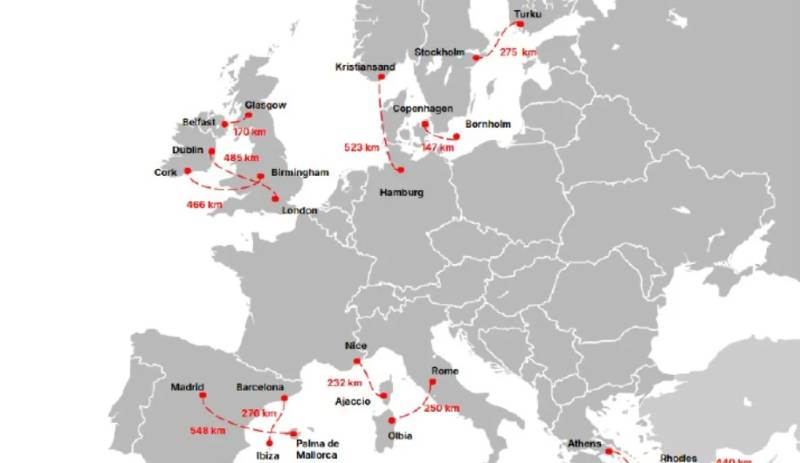
Electric aircraft could be coming to some of Spain's shortest flight routes within the next few years, with airlines and aviation companies investing in technology that could make flying cleaner and potentially cheaper.
Several European companies are developing battery-powered or hybrid aircraft designed specifically for shorter journeys, while Spanish airlines Volotea and Air Nostrum are also backing the technology.
The European Union Aviation Safety Agency (EASA) estimates that 25% of flights within the EU cover less than 500 kilometres, making shorter routes a potential starting point for electric aviation.
In Spain, routes between the Balearic and Canary Islands and connections such as Barcelona to Valencia and Palma are among those that could eventually benefit from the technology.
One company already working on electric aircraft in Spain is Spanish-Australian firm Dovetail, which has spent the past two years developing technology to convert existing small aircraft from kerosene to electric power.
The company already has permission from the Spanish Aviation Safety Agency (AESA) to carry out experimental flights and has been conducting ground tests of its batteries and electric motors.
Rather than building completely new aircraft, Dovetail is concentrating on converting existing planes carrying around 10 to 12 passengers.
David Doral, CEO of Dovetail as well as Volotea and Air Nostrum, believes this approach could significantly reduce development costs.
"Development is much cheaper," he said, explaining that "building an aircraft from scratch can cost hundreds of millions of euros," while converting an existing small aircraft costs around €1.5 million.
Dovetail is initially working towards fully electric flights of around 100 to 150 kilometres, with the technology eventually expected to cover journeys of up to 200 or 300 kilometres.
The company is also developing a hybrid system combining batteries with an internal combustion engine, which could use sustainable aviation fuel or other renewable gases.
Dovetail has now begun a pre-certification process with EASA, which has been developing the regulations needed to approve electric aircraft.
Other European projects are targeting much larger aircraft. German company Vaeridion hopes to have a battery-electric aircraft carrying up to 90 passengers certified by 2030, with a range of up to 550 kilometres. French company Aura Aero is developing a 19-seat hybrid-electric aircraft with a range of up to 1,500 kilometres.
Dutch company Elysian Aircraft is aiming for a 90-seat, fully electric aircraft capable of flying up to 1,000 kilometres by 2035.
Doral believes smaller electric aircraft could also bring back routes that have disappeared because traditional 20-seat planes weren't financially viable.
"They have decreased [in traffic] because they were very expensive to operate, and electricity makes them cheaper," he said.
He believes smaller aircraft could allow airlines to operate routes without needing to fill much larger planes, potentially opening up new connections between Spanish islands and smaller destinations.
Electric aircraft won't replace conventional planes on long-haul routes any time soon, but for short journeys they could offer another way of cutting emissions while making some regional routes economically viable again.
Image: EASA / Dovetail


Sign up for the Spanish News Today Editors Roundup Weekly Bulletin and get an email with all the week’s news straight to your inbox
Special offer: Subscribe now for 25% off (36.95 euros for 48 Bulletins)
OR
you can sign up to our FREE weekly roundup!
Read some of our recent bulletins:
Discount Special Offer subscription:
36.95€ for 48 Editor’s Weekly News Roundup bulletins!
Please CLICK THE BUTTON to subscribe.
(List price 3 months 12 Bulletins)
Read more stories from around Spain: