










Spanish News Today Editors Roundup Weekly Bulletin March 27

TOP STORIES: "Spanish airport strike threat before Easter could disrupt millions of passengers" & "Wetherspoon is already opening its 2nd and 3rd pubs in Spain!"
Hi all! It’s the start of the Easter week – a bank holiday week for school children and parents, a solemn reminder of Christ’s ultimate sacrifice for humankind for the devout, and the prospect of a four-day weekend coming up for those in gainful employment. Note: it’s not this weekend which is the long Easter weekend, but next weekend. For that reason, we are not going to be sending you out one of these Editor’s Roundup Weekly Bulletins next week. We’re taking time off for the holidays. I’m sure you’ll understand.
We’ll be back after Easter with the next edition on Friday April 10, but until then we leave you with news of strike action at airports coming up for this Easter holiday week (the strikes always seem to coincide with the holiday period, don’t they?) and of Wetherspoon’s latest expansion plans in Spain…
Get me to the airport early!
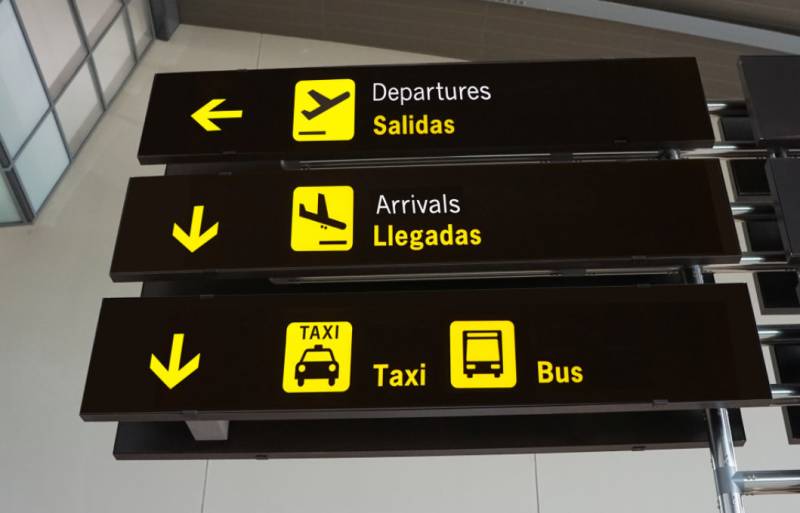
Spain is looking like a more popular choice than ever for Easter this year, with early bookings pointing to a much busier season than anyone expected. Travel platforms are seeing demand spike as tourists reconsider destinations affected by global unrest and look for somewhere safe to relax.
According to Beatriz Oficialdegui from Destinia, the numbers are up about 50% on last year, helped in part by Easter falling earlier this time and travellers favouring destinations closer to home.
Spain’s sunny beaches, historic towns and reliable infrastructure seem to be winning out, although she has warned that the country can’t push prices too high or it’ll risk losing visitors to Italy or Portugal.
But it’s not just rising prices that could see Spain lose out to other destinations, as the dreaded prospect of more workers’ strikes over the holiday period loom large again. Chaos is expected to descend on Spanish airports thanks to the strike action planned this Easter. Spain does seem to be a nation that thinks ‘strike first, talk later’ and this latest bout, like all the ones that have gone before, is designed to have as much impact as possible. Read: cause as much disruption as possible.
Ground staff at 12 airports are threatening indefinite industrial action starting Friday March 27, with walkouts planned every Monday, Wednesday and Friday. Baggage handlers are joining in too, with separate 24-hour strikes planned for March 28 and 29, followed by further action between April 2 and April 6. This includes staff working for Groundforce, a company that operates at some of Spain’s busiest airports.
Airports from Madrid to Málaga, Alicante, Palma, Barcelona, Bilbao, Valencia and the islands could all see chaos, and Palma alone could be dealing with more than 800,000 affected passengers. If no deal is struck, this could continue sporadically all the way to December, turning future trips into a game of luck and patience.
Adding to the fun, Spain’s new Entry Exit System (EES) for non-EU travellers is already causing snaking queues at border control. Brits heading out for Easter might find themselves stuck waiting up to two hours, with fears this could double once holiday crowds arrive.
Airports are trying to get out ahead of it, introducing dedicated lanes for UK passengers at Ibiza, Menorca, Málaga and Palma, but anyone hoping for a stress-free start to their Spanish getaway might want to pack extra patience and maybe a few snacks.
Spoons, wether you like it or not

There are certain things British travellers just can’t seem to live without when they go on holiday to Spain. Factor 50+ sun cream, a box of PG Tips shoved into the luggage and now, apparently, a pint at Wetherspoon before they board the plane back home.
The news that Wetherspoon is expanding its Spanish presence, with two more airport pubs planned at Barcelona-El Prat Airport for later this year/the beginning of next year, feels both entirely predictable, fantastically heartwarming and faintly surreal. Buoyed by the overwhelming success of its debut at Alicante Airport just a month ago, the chain is now doubling down on a very specific niche: pre-flight pints with a thoroughly British tinge, all available in sunny Spain’s airport departures areas.
To be fair, there is a certain logic behind it. Airports are, after all, great equalisers. Whether you are in Birmingham or Barcelona, the experience is broadly the same: queues, overpriced sandwiches and the vague feeling that time has stopped behaving normally.
So it makes sense that into this world of time stood still should step Wetherspoon, offering familiarity in the form of a full English breakfast at 6am or a burger and a pint before the gate number is announced. And for many travellers, that will be less a novelty and more a reassuring presence.
It’s also no accident where in the airports these pubs are being placed. Airside, no less, meaning you cannot even accidentally wander into one unless you are already in transit. This is not about embedding British pub culture into Spanish daily life; it is about catching travellers at their most captive and offering them something they already understand.
Of course, the idea of sipping real ale in an airport overlooking the Mediterranean does raise several eyebrows from Spain purists. The country is hardly short of its own bar culture, and one might argue that part of the joy of travel is, well, experiencing something different.
Then again, anyone who has ever tried to explain the concept of a “quick pint before boarding” knows that some habits travel exceptionally well, though it remains to be seen to what extent Spaniards at the airport will jump on that bandwagon, or whether they’ll stick with their cañita and a plate of olives, thank you very much.
And, while the new Barcelona airport Wetherspoon pubs – one which is due to be located in Terminal 1 in September 2026 and the other in Terminal 2 in January 2027 – follow hot on the heels of the Alicante branch, a statement from the company has confirmed that they will differ from that one in an important aspect.
While the Alicante Wetherspoon leans into a more Spanish aesthetic, with tiled floors and bright white walls, the Barcelona sites promise that typical Wetherspoon patterned carpet and the unmistakable Wetherspoon feel. And, according to a statement from Wetherspoon, it will “also serve real ale”.
It feels like just a series of gradual steps in Wetherspoon’s plan to take over Spain and Europe, and that they are slowly optimising their pub offering for exactly the type of punter they’re looking to appeal to. Because, at the end of the day, this whole expansion project – regardless what you think of it – says as much about British travellers as it does about Spain. The demand is clearly there, and Wetherspoon is simply meeting it with its usual indiscriminate efficiency.
As Wetherspoon founder and chairman Tim Martin said, “We aim to open a number of pubs overseas in the coming months and years, including those at airports.”
For better or worse, the full English is going international, one departure lounge at a time, and it could actually be a great way of exporting British soft power, showing a bit of our own culture and country to the world. Not an invasion, but an invitation. To come and have a pint.
Murcia
Murcia’s Corvera Airport doesn’t look like it’ll be one of the lucky locations getting a Wetherspoon pub any time soon, but there are other exciting new additions and openings on the horizon. Murcia city’s long-awaited new El Carmen train station, for instance, is edging towards completion, with the government insisting it will open before the end of this year.
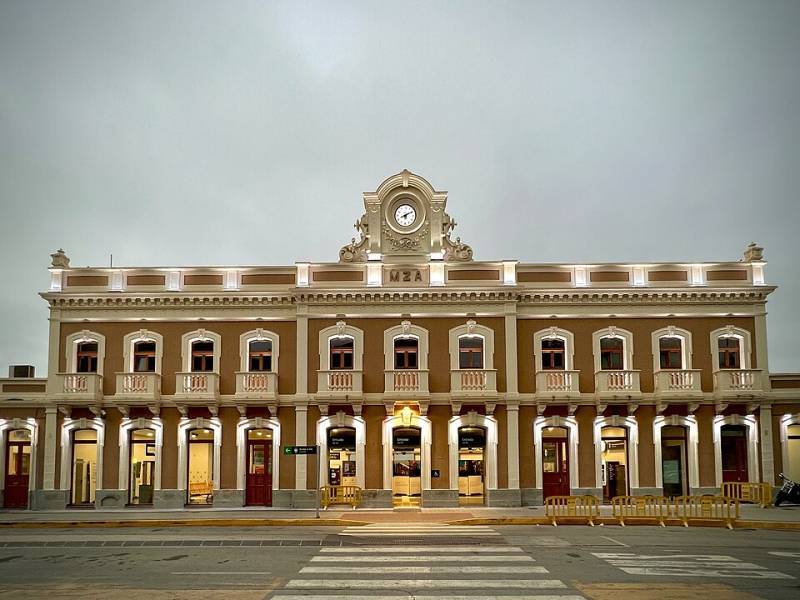 At around €600 million, this is not just a facelift but a complete rethink of how the regional capital moves, bringing together high-speed rail, buses and the existing network into one coherent ‘intermodal’ transport hub, and in doing so give Murcia something that feels like a modern transport system rather than a collection of separate parts that do not always speak to each other.
Much of the heavy lifting has already been done. Train tracks are in place, interior works are progressing and the finishing touches are being mapped out. There is even a 40,000-square-metre central plaza planned, complete with greenery and open spaces. If it all comes together as promised, it could be one of those projects that quietly changes how the city functions day to day, rather than just how it looks in a brochure.
Of course, timelines in infrastructure are always best taken with a pinch of salt, but there is a sense this one is genuinely nearing the finish line. With the Mediterranean Corridor continuing its slow but steady push towards Almería, El Carmen is being positioned not just as a station, but as a key link in something much bigger – namely, the rest of Spain and Europe. Whether it lives up to that ambition is another question, but for once, the direction of travel seems fairly clear.
At the same time, the Region of Murcia’s restaurants have picked up eight new ‘Soletes’ from the Repsol guide, bringing its total to 112. These are not fine dining temples like those picked out by the Michelin guide, but the kind of places people actually return to, valued for good food, fair prices and a sense of care. From creative kitchens in the city of Murcia to long-standing taverns in Cartagena and small, locally rooted projects in places like Bullas, the growing list reflects a food scene in the Region that is worth checking out if you haven’t already.
In La Manga del Mar Menor, too, progress is being made in the form of a 2.1-kilometre stretch of new pavement and promenade is close to completion, finally stitching together two sections that never quite joined up before, something which should make an immediate difference to anyone who has ever tried to walk along the strip and found themselves abruptly redirected by missing infrastructure. A continuous pedestrian route, better lighting and improved drainage may not sound glamorous, necessarily, but they tend to be appreciated the moment they are in place.
And along the shores of the Mar Menor itself, the race is on to get beaches ready for Easter after the recent storms made something of a mess of the coastline. Sand is being redistributed, walkways replaced and facilities upgraded, all with one eye on the weather and the other on the calendar.
If this feels familiar, that’s because there is always an annual scramble to present everything in its best light just as visitors begin to arrive, but this year, there is also a layer of longer-term thinking, with improvements to accessibility, environmental protection and even small touches like solar charging points starting to appear.
In the water of the Mar Menor itself, however, there has been a worrying development that has left researchers both frustrated, police baffled and the public outraged. That’s because part of an oyster farming experiment there has simply disappeared. The structure, along with the oysters attached to it, was part of a three-year study into how the animals’ natural, biological filtration mechanism could help improve water quality.
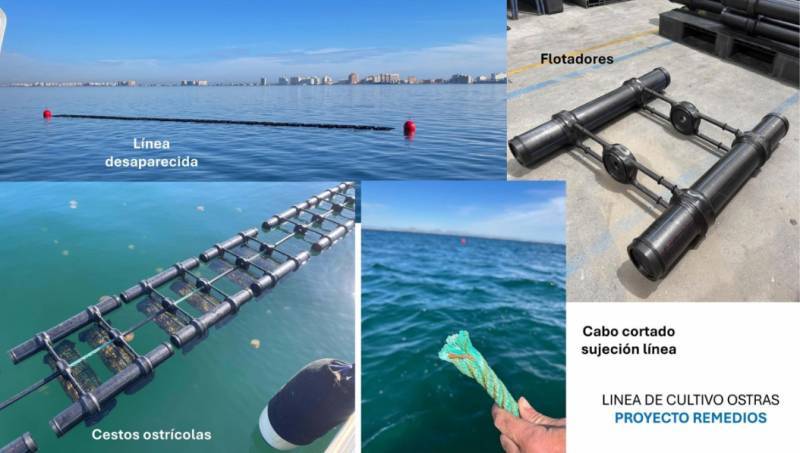
The apparent theft of the oysters – and that’s what the Guardia Civil are currently taking it to be – is more than just inconvenient; it disrupts data, delays progress and raises awkward questions about how something like that vanishes in the first place. And it also taps into a broader sense that the lagoon’s recovery, while often talked about, remains fragile. Scientific projects like this are slow by nature, dependent on consistency and time. When pieces of that puzzle go missing – quite literally – it becomes harder to maintain momentum.
Especially when not everyone is overjoyed at the prospect of restoring the lagoon’s natural habitat in the first place. The proposed restoration of the Floridablanca floating spa in Lo Pagán is a good example. On one level, it is easy to see the appeal: the original structure was an icon, a piece of local history that still holds a place in collective memory. Bringing it back as a spa, restaurant and museum sounds, at least superficially, like a neat way to reconnect with that heritage, not to mention boost local tourism.
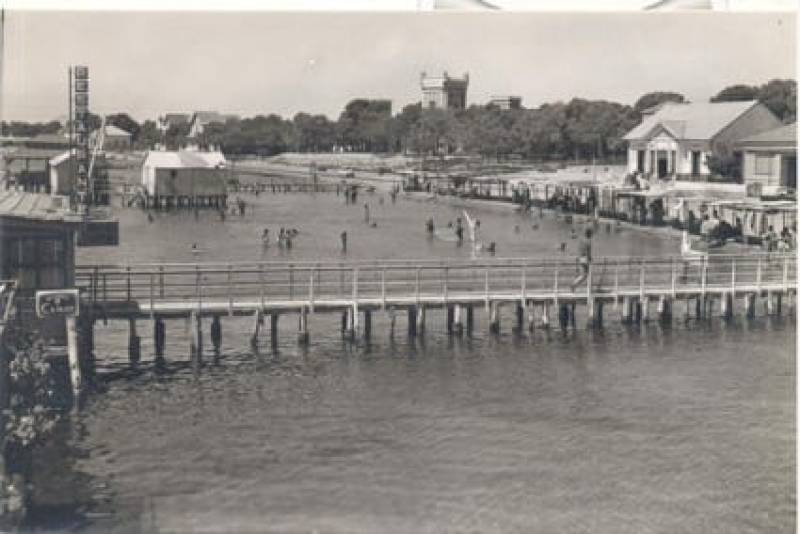 Yet the context has changed. The Mar Menor is not what it was in the mid-20th century, and any construction within such a sensitive environment inevitably raises concerns. Questions about environmental impact, the practicalities of building work taking place in the lagoon, and the balance between nostalgia and sustainability. It is not so much a question of whether it can be done, but whether it should be, and that is proving rather harder to answer.
If that feels like a difficult balancing act, it is nothing compared to the situation unfolding at El Portús (formerly naturist) campsite. Here, the gap between planning language and lived reality is particularly stark. The proposed transformation of the campsite into a more conventional tourist resort may tick all the right boxes in terms of regulation and long-term strategy, but for the remaining residents who still live at the site, it spells something darker and with a far more human face: the likely end of their homes, where many of them have resided for decades.
The official line from both the campsite owners and from Cartagena city council is that the site was never intended for permanent living – only for short-term tourist stays – and that modernisation of the site is both necessary and beneficial. But the stories coming from those still on site paint a much harsher picture, one where security continue to bully and harass residents on a daily basis, where people live in constant fear of eviction or being locked out of the compound they call home.
This has all floated back to the surface now as Cartagena has launched a 30-day consultation process, a formality that offers an official channel for people to present their objections, but while that could be seen as an opportunity for residents to finally find justice and hope, there is a lingering sense that the outcome may already be a foregone conclusion. And yet, the remaining residents – those who haven’t left because of overwhelming pressure or killed themselves (yes, that really happened!) – are determined to keep fighting on for their right to a dignified home and life regardless. Really, what else can they do?
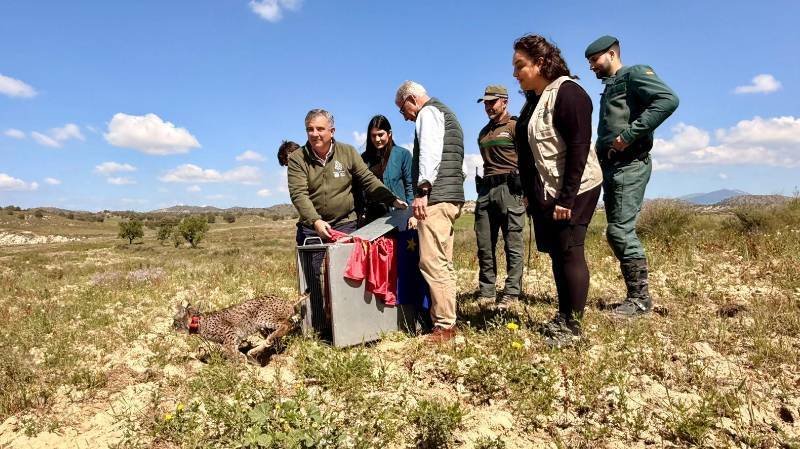 And, to finish on a more positive note – because those do still exist in the news, remember – the reintroduction of the Iberian lynx continues to gather pace, with a young lynx named ‘Wonders’ recently released into the Lorca Highlands. It is one of several releases this year, part of a wider effort that is starting to show real results. Stable territories are now forming for the lynxes, while new births in the wild have been recorded and connections between different regions are slowly being re-established.
It has taken years of coordination, patience and careful management to get to this point, and there is still a long way to go. But compared to where things stood not so long ago, when the species was on the brink, the progress is hard to ignore. In a week where some stories highlight just how complicated change can be, this is one that suggests it can, occasionally, go in the right direction.
Of course, today is the official start of the Semana Santa, the Easter Holy Week, so there are plenty of processions to go and see in Murcia’s towns over the next few days. Find out when your local procession of choice is taking place in our EVENTS DIARY:
Spain
Spain’s rental market has been turned on its head this week after the government pushed through a package of new measures designed to give tenants a bit of breathing room. If your rental contract is due to expire before the end of 2027, or you’re coming up to the end of a renewal period, you could be entitled to extend it by up to two more years on exactly the same terms.
Rent increases during that extension are capped at 2% a year, which given what’s been happening to the cost of living lately, is no small thing.
It’s not quite as simple as sitting back and waiting for it to happen automatically. Tenants do need to actually ask their landlord for the extension before the current contract runs out. In most cases landlords won’t have much choice but to say yes, with the only real get-outs being if they need the property back for their own use or if both parties agree to start fresh with a new contract.
Short-term lets, holiday rentals and room rentals aren’t covered, so if you’re in one of those arrangements, you’re on your own.
The measures came into force on 22nd March after being published in Spain’s Official State Gazette, but still need to be approved by Congress within 30 days. If they get the thumbs up, they could stay in place until 2027, but if they’re voted down they’ll be scrapped, although any extensions already agreed will still stand.
The government actually split the housing rules from its broader economic package deliberately, knowing that not everyone in Congress is on board with the full set of proposals. Whether it’ll be enough of a compromise to get through remains to be seen. Some parties have already said they’ll vote against it, largely on the grounds that it puts too much pressure on landlords and interferes with the market.
Speaking of costs, there’s actually some good news at the petrol station for once. The same package of government measures brought in VAT cuts on fuel and electricity, and drivers are already feeling it. Pump prices started falling from March 22 and depending on where you fill up you could be looking at savings of around 20 to 30 cents per litre compared to what you were paying just a few weeks ago.
In Madrid, unleaded 95 is sitting at around €1.62 per litre, Barcelona is a touch cheaper at €1.60, and if you’re in Valencia or Seville you’re doing even better at around €1.59 and €1.57, respectively. Guadalajara is still on the pricier end with petrol above €1.62 and diesel nudging close to €1.83, so perhaps avoid a road trip there for now.
It’s not exactly cheap compared to what most of us were used to before global oil markets started going haywire, but it’s a definite improvement. Tensions in the Middle East involving the US, Israel and Iran have been pushing prices up for weeks, so a government-backed reduction is welcome even if it doesn’t quite fix the bigger picture.
Better news still for Spain’s army of self-employed workers, the autónomos, who have historically had a fairly rough deal when it comes to taxes and charges. The government has announced plans to scrap IVA entirely for freelancers earning under €85,000 a year.
That means no more charging VAT on invoices, no more quarterly returns and no more of the administrative headache that anyone who’s ever worked as an autónomo in Spain will know all too well.
 Around 770,000 people are expected to benefit, which works out at roughly 22% of all self-employed workers in the country, with an average saving of about €660 a year each. Across the board that adds up to over €500 million, which is not to be sniffed at.
It also brings Spain into line with the rest of Europe. Remarkably, Spain has until now been the only EU country where self-employed workers had to charge and declare IVA regardless of how little they were earning, while France, Germany and others have had similar exemptions in place for years.
Better late than never.
The one thing worth being aware of is that if you opt in, you’ll still pay IVA on your business expenses but won’t be able to claim it back, so if your outgoings are on the higher side it’s worth running the numbers before you decide.
And finally, rounding off a week of mixed political fortunes, plans to tighten Spain’s drink driving limits have been voted down in Congress. The proposal would have cut the legal limit from 0.5 grams per litre of blood down to 0.2, bringing Spain much closer to a near zero tolerance approach.
Road safety groups had been pushing hard for the change, but it failed to make it through the Interior Committee. Critics argued that simply lowering the limit wouldn’t tackle the real problem, pointing out that most serious alcohol-related accidents already involve drivers who are way over the existing limit, sometimes by three or four times.
The rules stay as they are for now, although given the ongoing pressure from safety campaigners, it probably won’t be the last time this one comes up.
Alicante
The investigation into the murder of Northern Irishman John George has taken another twist this week, with a British man now in custody in connection with the killing of a key witness in the case.
The arrest was made by the Guardia Civil in the Region of Murcia, with the suspect subsequently placed in provisional custody following a court appearance.
The victim, 33-year-old Czech national Michael Maly, was shot dead in Torrevieja in the early hours of March 1. Maly had previously given testimony implicating the main suspect in John George’s murder, Jonathan Alan Smyth, and had told a court he’d received death threats allegedly linked to the same man.
Smyth, also from Northern Ireland, was extradited from Portugal following an international manhunt and released on €100,000 bail in December 2025. He remains under investigation.
Officers are still searching for additional suspects, and with more arrests potentially on the way, it’s safe to say this deeply unsettling saga is far from over.
On a similarly grim note, the search for a 47-year-old man who went missing in Murcia on March 15 has ended with the discovery of his body in the La Pedrera reservoir near Jacarilla in Alicante.

The search had been extensive, spanning both Murcia and Alicante provinces and involving the Guardia Civil, fire services and the Segura River Basin Authority, which reduced water flow through parts of the system to help search teams.
A Guardia Civil drone ultimately located the body in a drainage channel leading into the reservoir. Investigators have said that initial findings don’t suggest a violent death or any third-party involvement, although the results of a post-mortem are still awaited.
What we don’t have to wait for is the motorhome season along the Costa Blanca, which is back in full swing, and with it comes the familiar debate about where these vehicles should and shouldn’t be parking. The annual campervan invasion is well underway, with hundreds of vehicles spreading across Torrevieja and Orihuela Costa.
In Torrevieja they’ve turned up along residential streets, near La Mata beach and even within the grounds of the Lagunas de Torrevieja y La Mata Natural Park, where their presence raises real environmental concerns around waste and the impact on protected habitat.
 Over in Orihuela Costa, the large car park next to Zenia Boulevard has become something of a motorhome village, with some travellers stretching what was meant to be a quick stop into stays lasting weeks or even months.
Dedicated apps now make it easy for campervans to find and share the best spots to park without being moved on, which probably explains why certain locations have gone from unknown to overwhelmed in the space of just a few years.
The great campervan debate is stirred up around this time every year, with differing opinions in both camps, so to speak. On the one hand, many local businesses near Zenia Boulevard have reported a welcome uptick in sales of food and supplies to motorhome travellers, so there’s at least some economic silver lining to the influx.
The problem is that with no system in place to limit how long vehicles can stay or rotate them through, the benefits come bundled with some fairly unpleasant downsides. Reports of solid waste and wastewater being left behind in and around the natural park areas are hard to ignore, and for a protected habitat that’s had years of careful conservation work put into it, that’s not a trade-off many locals are willing to accept.
Andalucía
 Bullfighting might be a traditional Spanish art, but down in Málaga it seems that it is the foreign tourists who are keeping it alive and kicking. The Immersive Bullfighting Experience Centre at La Malagueta bullring welcomed 65,882 visitors in its first year, and it turns out Germans are leading the charge.
President of Málaga Provincial Council Francisco Salado revealed that 23.9% of visitors, around 15,700 people, came from Germany. The UK followed with 14.4%, roughly 9,500 visits, then Italy, Poland and the Netherlands. The Spaniards, meanwhile, made up just 4.2%, or 2,770 people.
Salado called this “a benchmark for all bullfighting enthusiasts and anyone who wants to learn more about the history of this art,” praising how it blends cutting-edge technology with tradition.
Visitors step into recreated spaces like the infirmary and corrals, complete with sounds, visuals and even smells. Presumably of blood. There is a virtual bullfighting simulator, for anyone who wants to have a go at pretending to be a macho bull killer, as well as six 3D stations, audio tours and some quite popular private guided tours.
February 2026 already saw 6,591 visits, averaging 5,490 a month so far. To celebrate the bullring’s 150th anniversary, locals get 50% off tickets until Wednesday June 11, 2027. Clearly, this cultural hotspot is drawing crowds who want to understand the spectacle, not just watch from the stands.
While some tourists are immersing themselves in Spain’s dubious traditions, others are just trying to get from A to B without too much hassle. Renfe has announced extra trains and buses for Easter travellers on the Madrid-Málaga route, as repairs drag on.
From Friday March 27 to Sunday April 5, the operator is adding 51,300 seats via a train-bus combo: rail from Madrid to Antequera, then bus to Málaga. There will be eight trains daily from Madrid to Málaga, seven back (eight on Sundays). This follows the Álora retaining wall collapse earlier this year, with the high-speed line now not reopening until late April at the earliest.
Renfe explored using gauge-changing Talgo trains on the conventional line but ruled it out due to operational limits. Rivals Ouigo and Iryo have suspended services completely. Tickets cover the full journey, though schedules may shift with demand. Passengers are advised to plan ahead and allow extra time for what remains a hybrid trip during one of the busiest travel windows of the year.
From daytime outings to night-time restlessness, it seems Andalucía could use a bit more shut-eye. A new survey reveals sleep is a real struggle here, with only 18.6% of people sleeping through the night uninterrupted. That leaves 33.5% waking every single night they go to bed. Only 37.3% of folk always wake feeling rested.
Screens are a big culprit: 53.3% use phones, tablets or TVs before bed, rising to 72.7% among 16- to 24-year-olds. Women fare worse, with 37.6% waking nightly versus 29.3% of men, and 15.5% using sleep aids compared to 7.6%.
Poor sleep ups the risk of heart disease, obesity, diabetes and more, plus anxiety and depression. Simple tweaks like ditching screens earlier, cutting caffeine and being smart about meds could help. It is not a cure-all, but better rest might just brighten those mornings.
And to make life a little easier all round, especially if you are feeling under the weather, Andalucía’s health service has gone digital in a big way. From Thursday March 26, anyone with public health coverage can access a virtual health card (TSV) via the Salud Andalucía app, ClicSalud+ or Citizen Folder. Regional Minister Antonio Sanz hailed it as a “giant leap forward”, making Andalucía a pioneer in Spain’s paperless healthcare push.
All you have to do is log in with a digital certificate, electronic ID or Cl@ve PIN (under-18s need Cl@ve too) to generate a 24-hour QR code for health centres, pharmacies or even other regions. Parents can add kids’ cards, too, and you can store multiple cards on one phone.
The physical card still works alongside it, but the drive to virtual cards is part of the Digital Health Strategy 2030, with over €316 million invested, bringing WhatsApp alerts, virtual waiting rooms and easier med renewals. There are over 760 free training centres offering help, especially for older users. As Sanz put it, “With this card, we are eliminating unnecessary bureaucratic barriers.”
So, download the app and get yours sorted: it really puts healthcare in your pocket!

You may have missed…
- The white diamond road sign in Spain: Don’t get caught out.
If you’ve been driving around Spain lately and spotted a white diamond symbol on a blue background, you might have wondered what it means… and might not know that misuse of what it means can lead to you getting a €200 fine! - Fears of burglary and squatting rise in Murcia as most homes still lack alarms.
Concerns about home security are on the rise in the Region of Murcia, even though relatively few households have installed alarm systems. - Experts warn of the link between hearing loss and a higher risk of Alzheimer’s, and how to prevent it.
Hearing loss in seniors is more serious than many may realise: studies show it may be linked to a higher risk of dementia, including Alzheimer's, and experts recommend regular hearing check-ups and taking care of your ears before the problem becomes serious. - Speeding in Spain could soon land drivers with jail time.
Drivers in Spain could soon face prison sentences for extreme speeding under new plans being considered by the government! - Scared of the dentist? Spanish research says a good podcast could be all you need!
If going to the dentist fills you with dread, you’re in very good company. Odontophobia, the clinical term for an irrational fear of dental treatment, affects around 15% of the population in Spain, and for many people it’s enough to put them off going altogether. Researchers at Pompeu Fabra University in Barcelona have been looking into what might help, and their findings are both surprising and pretty encouraging…
And finally, just to remind you again of what we said at the top of the bulletin, you will NOT receive a copy of this News Roundup next week, but there WILL be one the following week.
Also, don’t forget that clocks go forward early this Sunday morning, so if you still have old-style analogue wall clocks or watches in your home, remember to change them!
Now that really is all for this week. Thanks for reading and we’ll see you later.
Have a good Easter!