










Spanish News Today Editors Roundup Weekly Bulletin May 8

TOP STORIES: "Spain set to receive deadly Hantavirus cruise ship this weekend" & "Octopus farming could soon be banned due to their superior intelligence"
The world is gripped by drama on the high seas this week as it emerges that a deadly virus has broken out on a cruise ship, final destination Spain. The full story so far is below for you, just as below the seas there is good news for octopus lovers. So, without further ado, let us begin!
What the hell is Hantavirus?
So it all started kicking off this week, but on the other side of the Atlantic, with the news that Spain would soon be receiving a cruise ship in port that was carrying a deadly virus. It sounds like the kind of movie Keanu Reeves was making in the ‘90s, but it’s actually come true in 2026!
This is the story of the cruise ship MV Hondius, a Dutch liner that has become caught up in an international maelstrom after an outbreak of hantavirus on board, which has already claimed three lives and triggered a major cross-border health response.
The Hondius left Ushuaia in Argentina on April 1 carrying around 150 passengers and crew from 28 countries. Everything was ‘cruising’ along nicely until several passengers started to develop serious respiratory symptoms during the voyage. After investigation, it was confirmed that the cause was a case of the Andes variant of hantavirus, the only known strain capable of spreading between humans through very close and prolonged contact.

Three passengers have since died, including a 69-year-old Dutch woman, her husband and a German woman. The Dutch passenger reportedly travelled on two flights through South Africa before dying there on April 26, prompting the World Health Organization to begin tracing dozens of possible contacts. South African authorities have already identified many of the passengers and crew who may have come into contact with her during that stage of the journey.
The situation became even more complicated after dozens of people left the ship before the outbreak was fully understood, including passengers who disembarked on the tiny island of Saint Helena in the middle of the Atlantic on April 24. Health authorities are now attempting to track those travellers across several countries while also monitoring possible secondary infections.
The MV Hondius was later refused permission to dock in Cape Verde and has since remained offshore while international authorities coordinated a response. Spain has now agreed to receive the vessel at the port of Granadilla de Abona in southern Tenerife on Sunday, with the World Health Organization reportedly concluding that the Canary Islands are the nearest suitable location to safely manage the operation.
Spanish Health Minister Mónica García confirmed that the 14 Spanish nationals on board will be transferred to the Gómez Ulla Military Hospital complex in Madrid, where they will remain in quarantine for an undetermined period while health officials establish exposure timelines and carry out contact tracing.
British passengers have also been directly affected. Two Britons who left the vessel earlier are now self-isolating at home in the UK after possible exposure, while a 56-year-old British man evacuated from the ship remains in a stable condition in hospital in the Netherlands. Another British passenger, aged 69, was airlifted to South Africa and is reportedly improving in intensive care.
UK officials have said returning British passengers may be asked to self-isolate for up to 45 days. The Foreign Office described the outbreak as “very serious and deeply stressful” for those involved, although both British and Spanish health authorities continue to insist that the risk to the wider public remains low.
Spanish epidemiologist Amós García Rojas and Spain’s health emergencies chief Fernando Simón have both stressed that the situation “will not be a risk to Spain” if existing health protocols are followed correctly.
The World Health Organization has also moved to calm fears of a repeat of the Covid-19 pandemic, noting that hantavirus spreads very differently and is far harder to transmit between people. Still, it might help to send Tom Cruise or Steven Seagal onto the ship, see if they can work some ‘90s action movie magic to bring this thing to a swift resolution.
Octo-pause for thought
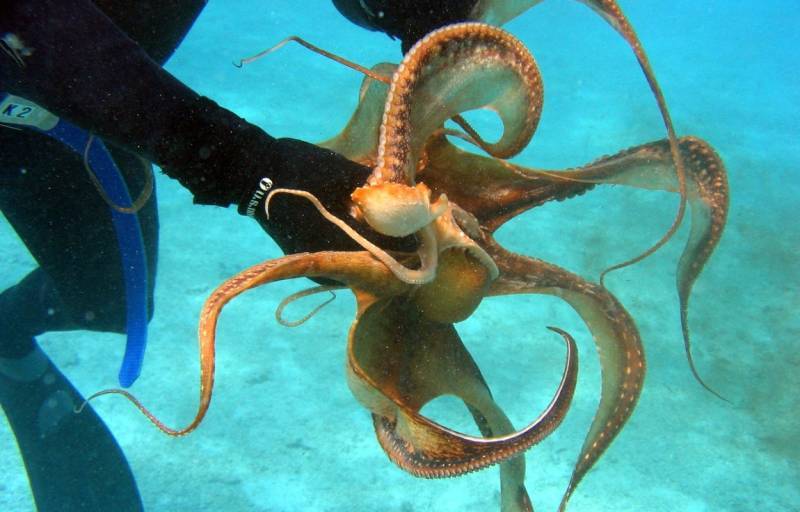
Ever the trailblazer, Spain is now stepping into new territory in the animal welfare debate, with plans being discussed to ban the breeding and sale of octopuses from intensive farms. It is a move that could put the country at the centre of a global conversation about how far food production should go, especially when it rubs up against possible animal cruelty.
The proposal follows growing scientific evidence that octopuses (not octopi) are far more intelligent than once believed. Researchers now describe them as highly complex, sentient animals, capable of learning, solving problems and even experiencing stress and suffering. In short, they are no longer seen as just another seafood option.
That shift in understanding is driving serious concerns about farming conditions. Octopuses are naturally solitary and territorial, and studies suggest that keeping them in confined spaces can lead to distress. Reported behaviours include aggression and even self-mutilation, which raises the questions of whether intensive farming can ever be appropriate, ethically speaking.
Of course, anyone who has ever been to Galicia or to other coastal areas of Spain will know that octopus is one of the country’s star dishes, including such delicacies as Pulpo a la gallega and Pulpo a la brasa. But the debate around banning the breeding of these creatures for food purposes has gained momentum recently following plans to build the world’s first large-scale commercial octopus farm in the Canary Islands.
Of course, supporters of the farm (mainly its stakeholders) argue that farming octopuses could reduce pressure on wild populations and help meet the demand in Spain for octopus on the dinner table. Critics, however, say the moral cost is simply too high.
For instance, there is still an unresolved issue around how to humanely slaughter an octopus. Proposed methods, such as gradual cooling in ice water, have been widely criticised by scientists as potentially slow and painful. But then again, if you’ve ever seen videos of how we slaughter pigs, sheep, cattle and chickens in abattoirs, you’ll know there’s very little that’s ‘humane’ about the meat industry.
If approved, the octopus legislation would go a step further by restricting the sale of farmed octopus products from other countries as well. That would mark a significant shift, suggesting that an animal’s intelligence could determine whether it is farmed at all, a move that could potentially mean good news for pigs, who are also said to be highly intelligent and social creatures!
Blue through that record!

Spain has just smashed its own Blue Flag record this week with a whopping 677 beaches earning the famous award for 2026, which is not only the highest number Spain has ever achieved, but also means that around 15% of all Blue Flag beaches on the entire planet are sitting right here in Spain. Not bad going at all.
The awards are handed out every year to beaches that tick all the boxes for things like water quality, cleanliness, safety, accessibility and environmental standards. Basically, if you turn up and find crystal clear water, proper lifeguards, decent facilities and no overflowing bins, there’s a good chance a Blue Flag is flapping somewhere nearby.
Spain absolutely cleaned up this year. Out of 713 beaches put forward for consideration, 677 got the nod. On top of that, another 111 marinas picked up Blue Flags too, along with six tourist boats.
The Valencian Community once again came out on top with 151 Blue Flags, followed by Andalucía with 143, Galicia with 118 and Catalonia with 101. Meanwhile, the Region of Murcia had an absolute belter of a year, picking up its best ever result with 41 flags in total, including 33 beaches and eight marinas.
Águilas in particular is clearly becoming one of the real gems of Spain’s coastline. The town grabbed 10 beach awards and two marina flags, putting it among the most decorated coastal destinations in the entire country. Cartagena wasn’t far behind either, racking up nine Blue Flag beaches plus two marina awards.
Then there’s the really impressive little detail hidden away in the small print. Only nine beaches and marinas anywhere in the world have managed to keep their Blue Flag every single year since the scheme began back in 1987 and every single one of them is in Spain.
But before everybody starts polishing the sun loungers too enthusiastically, not every beach had reason to celebrate this week because 12 beaches across Spain actually lost their Blue Flag status for 2026.
Some of the names are proper heavy hitters too. La Barceloneta in Barcelona is out. Puerto Banús-Levante in Marbella is out. Cala Fustera in Alicante province is out too. Even Los Cristianos in Tenerife lost its flag this year.
Beaches can lose the award for all sorts of reasons including water quality issues, overcrowding, missing lifeguards, poor accessibility, environmental damage or even not having enough rubbish bins. The Blue Flag inspectors take the awards very seriously and rarely miss a trick.
And honestly, some of the beaches losing out probably says as much about how insanely busy Spain’s coastline has become as anything else. Trying to keep beaches spotless, safe and environmentally protected while millions of tourists descend every summer is not exactly easy.
Still, with 677 Blue Flags safely in the bag, Spain’s position as Europe’s beach king is looking pretty secure for another summer!
Murcia
And yet, all that being said, some Mar Menor beaches are also back in the news this week for all the wrong reasons. An environmental platform, Pacto por el Mar Menor, has raised fresh concerns over the increasing presence of plastic waste washing up on the beaches of the Mar Menor. They say the problem is becoming more serious every day, and at the moment, no one is monitoring the issue.
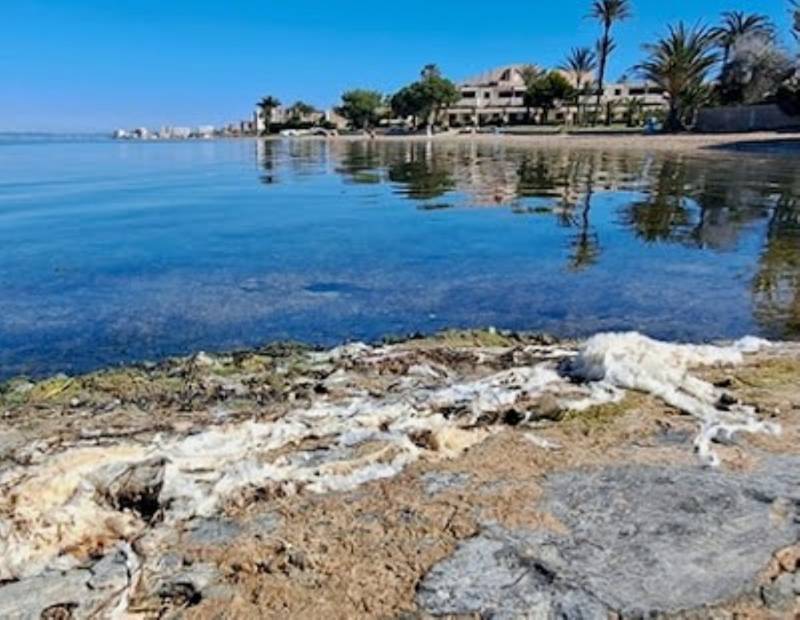 According to the group, agricultural plastic has become the main source of this plastic waste. The plastic fragments have been found along the shoreline and worryingly through microplastics. Their presence now confirms people’s worst fears that plastic contamination is embedded in the Mar Menor’s ecosystem.
They explained that agricultural plastic used on farms around the Mar Menor does not fully break down in the Region’s dry Mediterranean soils. These plastic particles can remain in the soil for years before being washed away by rainwater carrying pollution from farmland directly into the lagoon.
Pacto por el Mar Menor is calling for stricter controls over how agricultural plastics are used, managed, and disposed of, along with closer monitoring of their environmental impact.
Not far away, work has resumed on two 10-hectare solar farms near La Manga following a court ruling that found the projects met regional environmental requirements, though a group called the ‘Platform of Residents Affected by Photovoltaic Projects’ has criticised the ruling to lift a temporary suspension on the project, saying the decision allows construction to continue in an area they describe as “highly environmentally sensitive”.
The projects form part of ongoing investment in renewable energy infrastructure in the region. But residents argue the court has prioritised the company’s economic interests over environmental protection.
The site is located in one of the most strictly protected environmental areas. Residents say this should be monitored much more closely, especially as the Mar Menor is already under serious pressure from agriculture, long seen as a main cause of its environmental decline.
From one controversy to another, new data shows Murcia leading the national housing market, with resale properties up 23%. According to new data released by Spanish property portal idealista, the price of resale properties in Spain rose by 16.9% year-on-year in April, reaching €2,748 per square metre. But it was the Region of Murcia that led the way, recording Spain’s sharpest annual rise in resale property prices at 23%.
This steep rise in prices comes down to the classic economics pattern of rising demand meeting limited supply. It’s fairly well known why the demand is rising. But why is the supply so limited? One key reason is that many homeowners are reluctant to sell while sitting on fixed-rate mortgages agreed at much lower interest rates. Moving home today usually means taking on much higher borrowing costs. At the same time, new construction has slowed down in recent years.
Over to Camposol, where the infamous white elephant of a private hospital is up for auction after lasting just six months before going bankrupt. The Guadalentín Hospital was supposed to revolutionise healthcare in southwest Murcia, but it never even reached full capacity. Celebrated by the local community and built at speed with €11 million worth of state-of-the-art facilities, the hospital lasted around half a year before it had to close its doors.
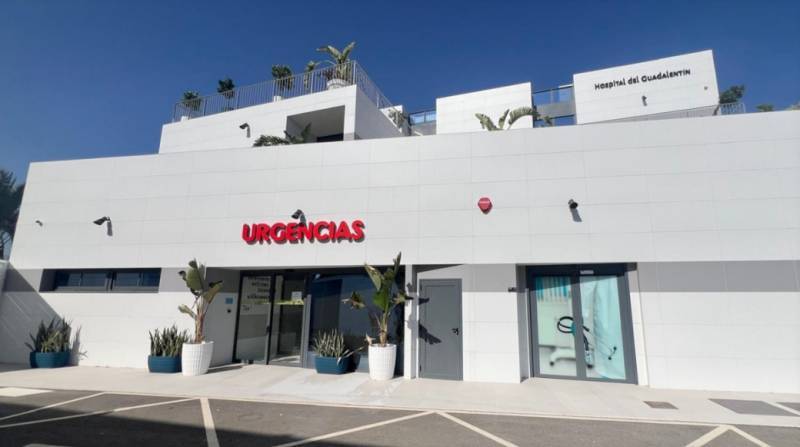 It became the main sponsor of the local football team Club Deportivo Bala Azul, announced it would accept medical insurance from international companies and opened a 24-hour emergency service, laboratory and diagnostic area in 2024.
But the problems began almost immediately. Despite the impressive facilities, the hospital failed to secure agreements with either the Murcian Health Service or private insurers, leaving it entirely dependent on a purely private revenue model that simply wasn't generating enough income.
By the autumn of 2024, liquidity problems were already becoming apparent, with suppliers going unpaid and staff experiencing delays in their wages. When the emergency service closed completely in November 2024, it effectively signalled the end. Operations ceased entirely in early 2025, with debts owed to employees, suppliers and construction companies. The entire facility is now being auctioned through Trademat Auctions, with bidding open until May 21.
Whether that means a fresh attempt at private healthcare in Mazarrón or a completely different use for the complex remains to be seen, but for now the building sits empty, its facilities largely unused and its ambitious promises unfulfilled.
In more positive Camposol news, there was important progress in the fight against the planned biogas plant. At a public meeting held on May 1, the Camposol Legal Platform against Biogas gave good news to the residents who are opposing the construction of a potentially damaging biogas plant only one kilometre from housing in the urbanization.
During the meeting, Jesús García, Deputy Mayor of Mazarrón, told Platform representatives that progress has been made on setting minimum distance rules for biogas plants. He said the council is working on stricter planning rules, including greater distances from homes, while the company behind the project is now considering alternative sites.
The Platform welcomed the development as a positive step for Camposol and nearby communities, but said caution remains until the approval process is complete.
And finally, April 28 marked the one-year anniversary of Spain’s historic blackout, when the lights went out across Spain for twelve hours, leaving millions of people and businesses suddenly aware of just how fragile the energy supply they’d always taken for granted really was.
Twelve months on, the Region of Murcia is responding in the most practical way possible, by generating more of its own. There are now around 40,000 registered solar self-consumption installations across the Region. Murcia now has more solar self-consumption capacity per person than anywhere else in Spain. Battery storage, in particular, has seen extraordinary growth, with installations more than doubling in the last year. Go on, Murcia!
Spain
Spain’s tourist industry is still absolutely motoring along despite all the uncertainty around the world. The latest figures suggest that people are not only continuing to flock here in huge numbers, but they’re spending more cash while they do it too. Which, given all the doom and gloom floating around globally at the moment, is probably exactly what the country wanted to hear heading into summer.
March turned out to be another massive month, with 6.8 million international visitors arriving in Spain, up 3.3% compared to the same time last year. Even more importantly for bars, restaurants, hotels and businesses nervously watching the numbers, tourists splashed out a record-breaking €9.6 billion during the month alone.
What’s interesting is that spending is rising faster than visitor numbers now. In simple terms, tourism growth has calmed down a bit compared to the mad post-pandemic boom years, but the people coming are actually spending more money when they get here. Average spending per trip is now sitting at around €1,411 per person, with tourists spending roughly €198 a day.
Brits, unsurprisingly, are still sitting pretty at the top of the table. Nearly 1.3 million UK visitors came over in March alone, pumping more than €1.2 billion into the Spanish economy. Whether it’s Benidorm, the Costa del Sol, the Balearics or the Costa Blanca, the UK market remains absolutely vital for Spain.
Andalucía had a particularly strong month too, seeing visitor numbers jump by more than 10%, while the Canary Islands remained reliably busy as ever. Catalonia actually saw a slight dip in tourist numbers, although visitors there ended up spending more overall anyway.
Altogether, the first three months of 2026 have already brought 17.5 million tourists into Spain, with total spending topping €25 billion. Not a bad start to the year at all.
Of course, there’s still a bit of nervousness bubbling away underneath the optimism because tourism doesn’t exist in a vacuum. Rising fuel prices are still causing headaches for airlines and ongoing tensions in the Middle East are making businesses across Europe twitchy about what might happen next.
And speaking of things that could end up affecting daily life in Spain, pharmacies are keeping a close eye on a growing issue involving common medicines like paracetamol and ibuprofen.
The concern centres around the Strait of Hormuz, one of the world’s most important shipping routes and a key passage for ingredients used in the production of many everyday medicines sold across Europe. With tensions involving Iran continuing to escalate, there are fears supply chains could start feeling the pressure.

At the moment, there’s no need for anybody to panic-buy painkillers like it’s toilet roll in 2020, but pharmacies in parts of Spain are already starting to notice small supply hiccups from certain manufacturers.
The bigger issue is that shortages have slowly become more common in recent years anyway. Spain is currently dealing with supply problems affecting close to 900 medications, including some forms of ibuprofen, paracetamol, menopause treatments and glaucoma eye drops.
Thankfully, pharmacists say alternatives are still widely available in most cases, particularly generic versions, so patients are not suddenly being left without treatment. But it does highlight how quickly international problems can trickle down into everyday life.
The authorities are now monitoring medicine stock levels much more closely using a real-time tracking system called NotificaMES, which gives officials a clearer picture of what is happening in pharmacies across the country.
For now, the overall message is fairly calm. There’s no widespread shortage and most people will probably notice absolutely nothing when they next pop into the chemist.
While our usual painkillers might still be available, whether we can afford them or not is another question. Absolutely everything seems to cost more these days and food shopping is one thing that has become noticeably more expensive over the last couple of years. Most households are feeling it every single week at the checkout.
On average, people in Spain are spending around €150 a month per person just on food and that’s before cleaning products, toiletries and all the random bits you somehow always end up throwing in the trolley.
With prices creeping upwards again, shoppers are increasingly looking for ways to cut the bill without surviving entirely on instant noodles and sadness.
According to industry insiders, one of the biggest money-saving tricks is also one of the simplest: actually making a shopping list and sticking to it. Sounds obvious, but it works. Experts reckon it can cut supermarket spending by up to 25% because it stops people wandering the aisles throwing biscuits, snacks and “that looks nice” purchases into the trolley.
Shopping while hungry is also basically financial self-sabotage. Everybody knows you go in for milk and somehow leave with garlic bread, ice cream and three kinds of ham you didn’t need.
A lot of shoppers are also becoming far less loyal to one supermarket now. Plenty of people split their shopping between Mercadona, Lidl, Aldi, Carrefour and Consum depending on what’s cheapest where. Lidl and Aldi often come out best for basics, while Mercadona tends to sit somewhere in the middle depending on what you buy.
Then there’s the rise of supermarket own brands, which are now absolutely everywhere in Spain. Nearly half the products shoppers buy are supermarket brands these days and, honestly, some of them are basically identical to the expensive versions sitting right beside them.
Frozen food is another sneaky money saver people are rediscovering too. Frozen meat, fish and vegetables are often significantly cheaper and last far longer, which means less waste and fewer emergency supermarket runs halfway through the week.
None of these changes on their own are exactly life-changing, but together they can take a decent chunk off the monthly bill. And right now, with prices still wobbling around and uncertainty hanging over everything from tourism to medicine supplies, most households will take every little win they can get.
Alicante
Last weekend, there was a bit of a scare in the Vega Baja following a huge fire at the Desguaces Mora scrapyard in Benejúzar. The blaze broke out on Saturday afternoon in the scrapyard’s outdoor storage area, where large numbers of vehicles and other materials were being kept.
 Thick black smoke quickly spread across the area and could be seen from kilometres away, causing concern among residents and motorists, particularly because the site is located relatively close to the Vega Baja Regional Hospital in San Bartolomé. Firefighters from Orihuela and Almoradí were among the first on the scene, supported by units from across the province as crews battled to stop the flames spreading further.
Tanker trucks, heavy urban pump engines and command units all took part in the operation, while police secured the surrounding area. Despite the scale of the fire and the striking images shared across social media over the weekend, no injuries were reported.
Crews remained at the scrapyard overnight carrying out cooling work and monitoring hotspots before the fire was officially declared out at around 8.30am on Monday. Investigators are now working to determine the cause of the blaze, especially as the scrapyard has reportedly suffered fires in the past.
Elsewhere in the Vega Baja, a man aged between 40 and 45 died after falling into an irrigation ditch in the rural Orihuela district of La Aparecida, close to the border with the Region of Murcia. Emergency services were alerted late at night after the man failed to return home after going out to water his crops.
Police and firefighters launched a search after discovering a vehicle with its lights still on beside the ditch in the Hoyico de la Virgen area. After more than two hours searching nearby land and waterways, officers discovered the man’s body around 200 metres from the car. Authorities are continuing to investigate the circumstances surrounding the incident.
Meanwhile, in Benidorm, Spanish police have arrested a British fugitive wanted in the UK over alleged drug trafficking and money laundering offences. The 32-year-old man was detained by the Policía Nacional after investigators traced him to the Costa Blanca resort town following the issuing of a European arrest warrant.
According to the investigation, the suspect was allegedly linked to a criminal organisation operating in Blackburn between 2022 and 2024 that was involved in the supply of cocaine, ketamine and cannabis, as well as laundering criminal profits through various bank accounts. Police believe he fled the UK after learning an associate had been arrested.
The suspect has now been placed at the disposal of Spain’s National Court while extradition proceedings move forward.
Andalucía
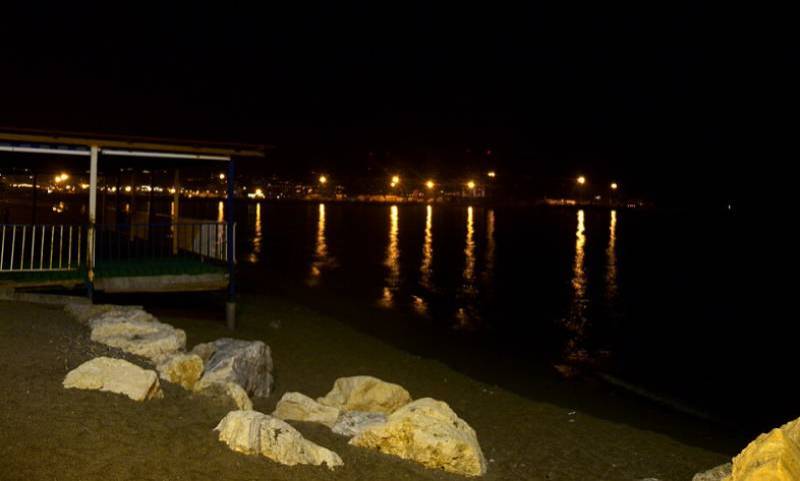 In Andalucía, another British man has been found dead on a beach in Málaga after a three-day search involving police, coastguards and Red Cross officials. The 25-year-old was reported missing after he was last seen entering the sea at the Playa de la Misericordia beach late on Wednesday April 29 and did not come back out. His body was later found early on Saturday May 2 on nearby Playa de Huelin.
The discovery brought a swift response from emergency teams, who had already been searching the coastline by air, land and sea since the alarm was raised. According to the emergency coordination centre, the alert came in shortly before 8.20am on Saturday after authorities were told there was a deceased man next to a picnic area on Huelin beach. Medical services, Policía Local, Red Cross, Guardia Civil and Policía Nacional were all mobilised.
Police have confirmed that his death is not being treated as suspicious, and said there is nothing to suggest criminality. His identity was only confirmed after the body was found, and it is still not clear whether he lived locally or was visiting the area. The cause of death has not yet been confirmed, and the autopsy results will be sent to the investigating magistrate.
Just like in Murcia, house prices in Andalucía continue to rise – by 15% year-on-year in the first quarter of 2026, taking the average to €1,668 per square metre. That is still below the national average, but the gap is narrowing fast, and the pressure is being felt right across the region. A typical 90-square-metre home now costs around €150,120, which is nearly €20,000 more than a year ago.
Málaga remains the priciest province in Andalucía by some distance, with prices now at €3,143 per square metre, while Cádiz, Granada, Seville and Almería have also seen strong double-digit rises. Huelva and Córdoba have climbed too, although more modestly, and Jaén remains the cheapest market in the region at €841 per square metre.
Rents are up as well, though not as sharply, with the regional average now at €11.03 per square metre per month. Málaga again tops that list, followed by Cádiz and Seville, while Jaén is the most affordable.
Even so, Andalucía is also playing a bigger role in housing supply, leading Spain in both building permits and completed housing certificates in 2025. For many would-be buyers, though, the picture remains difficult, with rising prices making it harder to get onto the ladder at all.
And finally, there’s still time to plan a trip to Mojácar for next Sunday, May 17, to take part in a mass ‘Dance for World Peace’ on Playa de la Mena, absolutely free of charge, beginning at 10.30am opposite the Titos beach bar.
The event is being organised by the Free Spirit Movement, together with Chiringuito Titos and Mojácar Town Hall. It will start with a short ceremony “offering a prayer for peace on Earth, in our relationships and in our hearts”, before participants dance barefoot on the sand “in connection with the Earth”. Guests are asked to wear white and bring water, a hat, sun cream and a flower for the communal altar. Children are welcome, as long as they stay with their parents or carers.
Afterwards, those who wish can join a swim in the sea before heading to lunch at 1.30pm. The vegetarian paella and drink at Titos costs €5, although booking and payment must be made in advance. With everything that’s going on in the world, peace is exactly what we need right now, and who doesn’t love a good dance? Can’t hurt to try, can it?

You may have missed…
- Save up to 50% on fuel with these top tips from the DGT Spain.
Rising oil prices in Spain mean it’s time to start driving smarter and these new habits could save you a fortune! - Budget airline battle as Wizz Air fills the gap left by Ryanair in Spain.
Spain’s low-cost airline market is starting to look very different and Wizz Air is clearly hoping to take advantage of the turbulence surrounding Ryanair’s recent cuts. - Common mistakes when choosing health insurance and how to avoid them.
Choosing health insurance is one of the most important decisions for ensuring wellbeing and peace of mind when living as an expat in Spain. However, many people make mistakes when taking out a policy that can result in less security when facing unforeseen circumstances. ASSSA, a health insurance company with more than 90 years of experience and a high level of specialisation in expatriates, explains some common mistakes when choosing health insurance and how to avoid them. - Mercadona changes home delivery rules leaving some shoppers stranded in Spain.
Mercadona shoppers across Spain are facing a frustrating new change that could make the weekly supermarket run a lot more complicated, especially for people without a car: Spain’s favourite supermarket chain has confirmed that from this week, home delivery will no longer be available from some physical stores, ending a system many customers relied on for larger shops. - Spain is set for hotter than usual May to July, according to experts.
To say it’s been an unsettled and unpredictable start to the year is something of an understatement. Now, though, early summer could feel warmer than normal in Spain, but plenty of rain is still on the cards, according to the State Meteorological Agency.
And there we have it for this week. Thanks, as ever, and we’ll be back for more next week.
See ya!