





The Corner of Death in Caravaca de la Cruz
Harpy, mermaid, pagan goddess or John the Evangelist, the only sculpture on the exterior of the church of El Salvador has witnessed daily life in Caravaca for many centuries
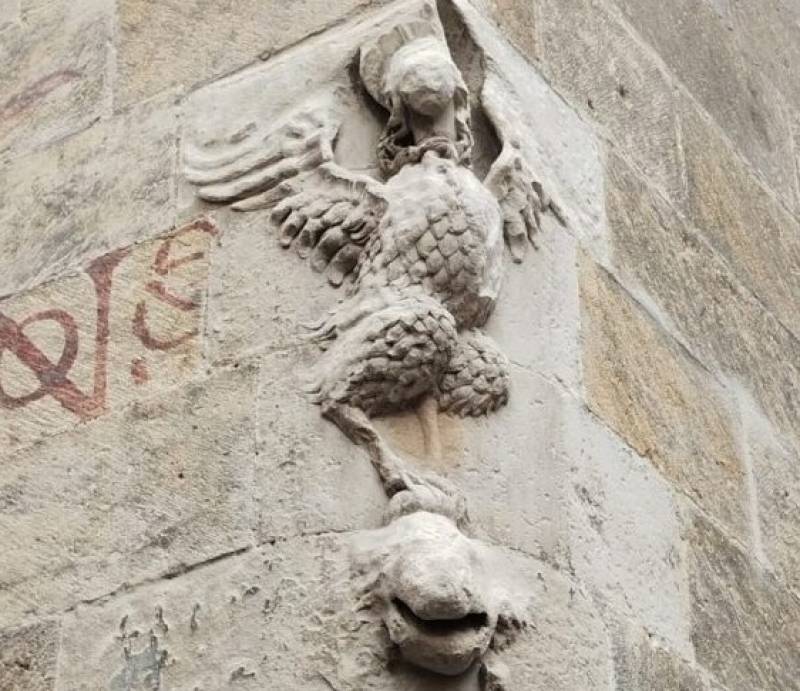 One of the many curiosities to be found in the old centre of Caravaca de la Cruz is a strange sculpted figure on the south-eastern corner of the magnificent church of El Salvador, which has been interpreted as a mermaid, a gargoyle, a harpy and many other things, but which definitely inspires an uneasy feeling of foreboding which has earned the spot the nickname “La Esquina de la Muerte”, or The Corner of Death.
The church of El Salvador was built in two phases in the 16th and 17th century, so of course it’s impossible to guess what was in the mind of the stonemason who created the figure at the confluence of Calle Mayor, Plaza del Arco and Plaza Nueva (right outside one of the tourist offices) – the only one on the entire exterior of the church. However, the most credible theory seems to be that it resembles a harpy – a figure from Greek and Roman mythology which was half-human and half-bird and was sometimes thought to be a personification of storm winds.
The harpies were said to steal food from people while they were eating (or sometimes before), and when someone disappeared they were said to have been taken by the harpies. Clearly not friendly creatures, and on the figure in Caravaca it is still possible to see the layered feathers (although some have seen them as scales) on the body which then features a human head.
This head is again a source of doubt: it has long hair and for many it is natural to assume it is a woman, but the dilapidation of the stone makes it difficult to be certain, and we certainly can’t imagine what it looked like when those entering the city in centuries past laid eyes upon her for the first time.
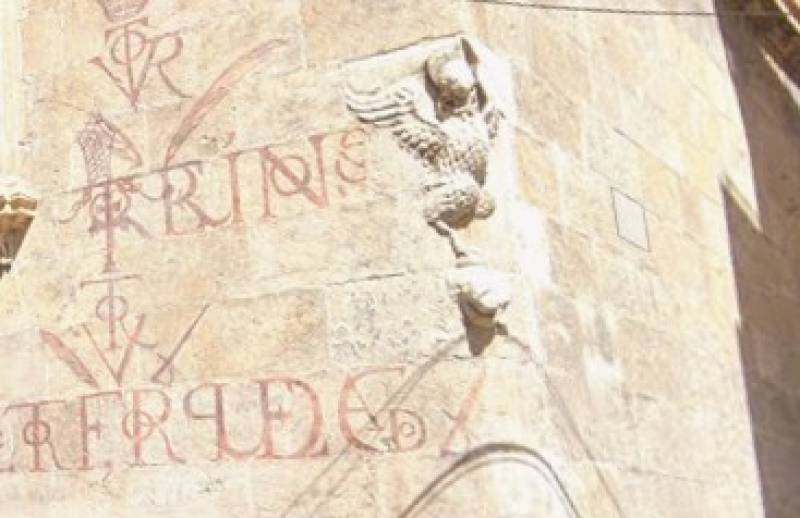 As has already been mentioned, another idea is that the figure is a mermaid, although not of the variety which sports a fishtail. In Homer’s Odyssey mermaids are described without reference to the fishtail, so this is not completely implausible: her merely says that they are found close to maritime shipping routes and that they lure sailors to the rocks with their song before leading their souls to Hades.
Alternatively, it could even by a figure of San Juan (St John the Evangelist, not the Baptist). This is based on the theory that the bird depicted is St John’s eagle, although there are plenty of problems with this hypothesis: for example, why portray the Saint in such an unusual way? And why not include all four Evangelists (the others being Matthew, M ark and Luke), one at each corner of the church?
In the light of such uncertainty, there are even theories that the figure could be some Basque pagan goddess, perhaps Andra Mari, and it also bears a certain resemblance to the “lamiak” of Basque tradition (many of the craftsmen working on churches in Murcia at the time were from the north of Spain, and it is known that one of the chief stonemasons at El Salvador was the Basque Martín de Homa – his coat of arms features two harpies!).
Another question is, why the insistence in Caravaca on associating the sculpture with Death? Perhaps the square it overlooks was the scene of a violent skirmish between the armed warriors of the Templars and Moorish invaders from the kingdom of Al-Andalus? Or perhaps duels were fought here, at a location outside the old city wall?
What we do know is that at least two murders took place in the square below: in 1750 local resident Saturio de Mata met his end in a scuffle with two drunkards on Christmas Eve, and in 1814 Miguel Navarro was stabbed after another argument, this time about politics. We was wounded in Plaza Nueva before managing to make it as far as the Corner of Death before dying.
Or perhaps it was at this corner that the parish priest bade farewell to funeral processions on their way to the old cemetery in cases where the families were too poor to afford funeral rites at the grave? Or maybe it was just that the layout of the old streets still causes a chill wind to blow around this corner to this day?
A true mystery, and one which after so many years will probably never be solved. But next time you’re passing, it’s worth taking a look at a figure which has presided over up to 500 years of history in the city of Caravaca, and appreciating the respect with the locals treat it!
For more local events, news and visiting information contact the local tourist office (telephone 968 702424) or go to the home page of Caravaca Today.
Caravaca de la Cruz tourist office
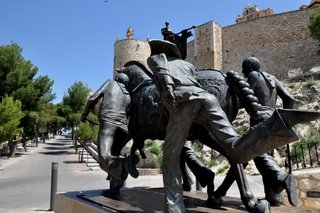 More information about the places of interest which can be visited in the municipality of Caravaca de la Cruz, along with what's on and local news can be found in the Caravaca Today.
Caravaca de la Cruz, in the north-west of the Region of Murcia, is one of only 5 Holy Cities in the Roman Catholic world, a centre of pilgrimage, along with Rome, Jerusalem, Santiago de Compostela and Santo Toribio de Liebana, and is home to the Cross of Caravaca, the Vera Cruz.
The status of Holy City was bestowed by Pope John Paul II in 1998, granting the City a Permanent Jubilee year every 7 years for perpetuity, the first one held in 2003 and the next in 2024.
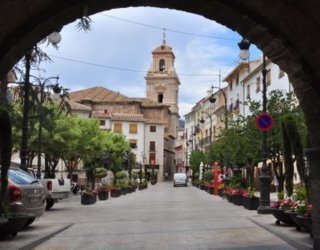
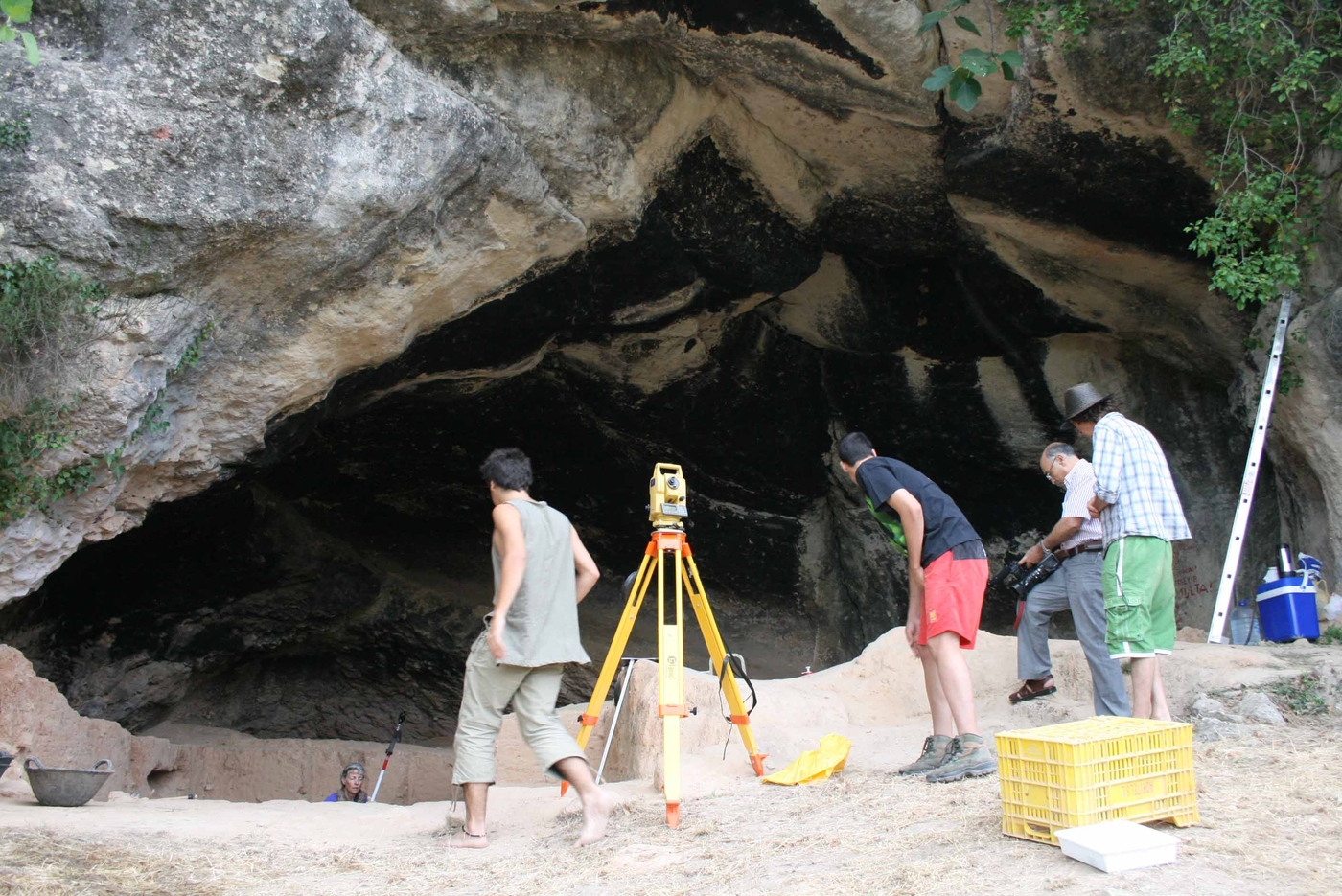
The strategic and natural advantages of Caravaca de la Cruz have attracted the attention of settlers for more than 800,000 years, the Cueva Negra yielding remains of Homo Heidelbergensis, forbears of the Neanderthals and the municipality also houses important archaeological remains from the Argaric, Iberian and Roman cultures. many of these can be seen in the Municipal Archaeological Museum.
 As a border town caught between the Catholic forces of Castille and the last remaining Moorish stronghold in Spain, Granada, Caravaca had a turbulent medieval history, but it was during this period that the legend of the Cross of Caravaca was born, bringing the religious orders which shaped the structure of Caravaca today, with its impressive hilltop castle and eclectic collection of churches and monasteries, religious tourism today being a backbone of the town´s economy.
Caravaca de la Cruz is a municipality with important natural resources, including extensive forests, part of which have protected status due to their wealth of flora and fauna, and due to the abundant water supplies is also a major area for canned fruit production, apricots in particular being an important crop.
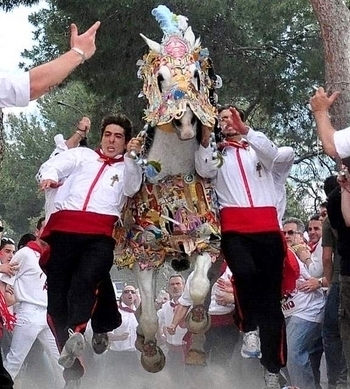
 Caravaca is renown for its important May Fiestas, held in honour of the Vera Cruz, which also incorporate the Moors and Christians celebrations and the Running of the Wine Horses.
Caravaca de la Cruz is also the home of Europe´s largest collection of ethnic instruments at Barranda, the Museo de Música Étnica Barranda and is the location of the Barranda festival de Cuadrillas, which celebrates the Region's ethnic music traditions.
The municipality is home to around 26,000 inhabitants and shares boundaries with Moratalla, Cehegín, Lorca, Puebla de Don Fadrique in the province of Granada and Vélez-Blanco in the province of Almería.
Tourist office opening times:
Weekdays: 10.00 to 14.00 and 16.30 to 19.30
Saturdays: 10.30 to 14.00 and 16.30 to 19.30
Sundays and public holidays: 10.30 to 14.00
Click for map, Caravaca de la Cruz Tourist Office