Guidelines for submitting articles to La Torre Golf Resort Today
Hello, and thank you for choosing La Torre Today.com to publicise your organisation’s info or event.
La Torre Golf Resort Today is a website set up by Murcia Today specifically for residents of the urbanisation in Southwest Murcia, providing news and information on what’s happening in the local area, which is the largest English-speaking expat area in the Region of Murcia.
When submitting text to be included on La Torre Golf Resort Today, please abide by the following guidelines so we can upload your article as swiftly as possible:
Send an email to editor@spaintodayonline.com or contact@murciatoday.com
Attach the information in a Word Document or Google Doc
Include all relevant points, including:
Who is the organisation running the event?
Where is it happening?
When?
How much does it cost?
Is it necessary to book beforehand, or can people just show up on the day?
…but try not to exceed 300 words
Also attach a photo to illustrate your article, no more than 100kb
PROPERTY SEARCH
article_detail
Date Published: 26/12/2025
2025 Spain news: The year in review
The apagón, Torre Pacheco riots… what a year it’s been! These are all the main news stories from around Spain which we’ve reported on over the course of the year
As the year draws to a close, it feels like 2025 has packed in more drama, disruption and devastation for Spain than many years before it. From the nationwide power blackout back in April that left millions of people quite literally in the dark to the worrying extreme weather conditions and the problems they increasingly cause for daily life, this has been a year that repeatedly reminded us how quickly normal life can be upended.
Here is Spain Today Online’s month-by-month look back at the major stories that shaped the year in Spain:
January
The year began on a sombre note with the discovery of the decomposed body of John George, a 37-year-old man from Northern Ireland, in a rural area of Rojales in Alicante province. He had been missing since mid-December 2024 and the case quickly became an international homicide investigation involving both Spanish and UK authorities. Multiple international arrest warrants were issued for the suspected killer, who remains at large a year later.
At the same time, Spain’s health system came under severe strain as flu cases surged sharply following the last Christmas period. Hospitals across the country reported overflowing emergency departments, a pattern that has now become an almost annual winter occurrence. Once again, public health officials warned that vaccine misinformation was not helping matters, a message that would feel particularly familiar by the time December came around again…
February
February brought one of the most extraordinary sights many of us will ever see in the night sky: a rare planetary alignment in the skies above Spain, with seven planets lining up in a spectacle that will not be repeated until the year 2492. Venus, Mars, Jupiter and Saturn were visible to the naked eye, while Uranus and Neptune required telescopes, offering stargazers a genuinely once-in-a-lifetime experience.
On the ground, the government announced new regulations aimed at clamping down on nuisance spam calls. Companies were banned from making unsolicited commercial calls from mobile numbers and were required to use recognised 800 or 900 numbers or registered landlines. In theory, it was good news for consumers, although many people who are still receiving spam calls on a near daily basis would argue that the reality has yet to match the promise.
February also saw a rise in the minimum wage in Spain to €1,184 a month, benefiting around 2.5 million workers. However, the introduction of income tax for some minimum wage earners at the same time diluted the impact of the increase. Every silver lining has its cloud.
March
March marked the return of summer flight schedules at Spanish airports, including Murcia’s Corvera Airport, where the 2025 summer programme offered more routes than winter but fewer than summer 2024. Airlines including Ryanair and easyJet opted to increase frequencies of the usual flights rather than add new destinations, and while some international routes were dropped altogther, all the UK, Irish and Belgian connections returned. A new service to Marseille was introduced.
April
April was arguably the busiest and most dramatic month of the year, dominated by what would become the defining event of the year: the apagón. This unprecedented nationwide power blackout on April 28 affected mainland Spain, Portugal and parts of southern France, paralysing transport, communications and essential services. Traffic lights failed, mobile networks collapsed and thousands of people were trapped on trains or in lifts. Hospitals switched to emergency generators and cancelled all non-urgent care.
It’s easy to forget now, but it was a chaotic time and, for many of us, genuinely frightening, sitting in the dark with the food going bad in the fridge, no phone signal, no information on what was going on and no idea of when – if ever – the power might come back on. A frightening reminder of just how dependent we are on giant corporations and governments for our creature comforts, and how vulnerable our lives are, without us ever suspecting it.
While social media quickly filled with conspiracy theories, the real cause of the blackout was far more mundane: a chain reaction of power surges triggered by failures in solar plants and compounded by coordination issues within the grid.
By the morning after, over 92% of electricity demand had blessedly been restored, though five deaths were ultimately linked to the blackout.
A new rubbish collection tax also came into force, obliging municipalities to reflect the true cost of waste management by passing on increased charges to taxpayers, while several pension reforms were introduced to give retirees more flexibility to combine work and pensions. By any measure, April was a lot to take in.
May
In May, the EU updated air travel rules to ban power banks from checked luggage, citing fire risks in aircraft holds, and passengers were limited to taking these devices in hand luggage only. In the Region of Murcia, a new airport transfer service, Airport Buses, launched to connect Corvera Airport with towns and coastal resorts across the region and beyond, a service that was warmly welcomed by frequent flyers and seen as a long-overdue improvement in regional transport links. Long may it last!
June
June ushered in summer early with a particularly intense and premature heatwave. Temperatures in parts of Andalucía approached 40°C far earlier than usual, setting the tone for what would become an exceptionally hot summer.
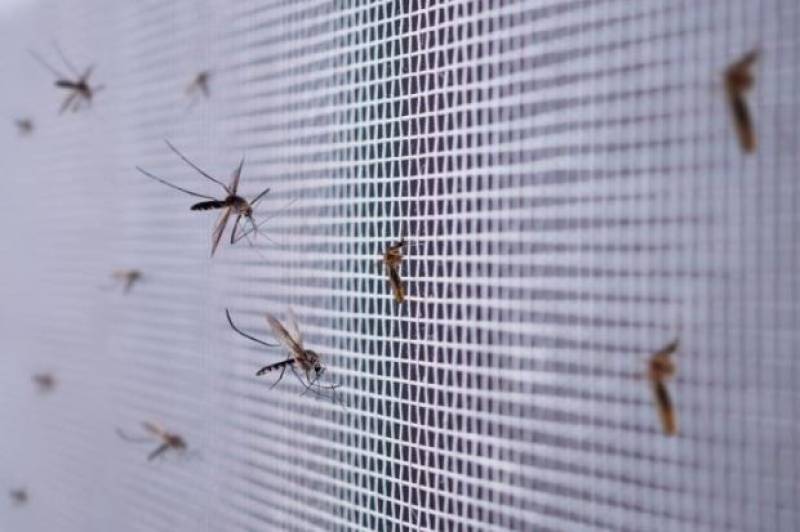
The heat, combined with heavy rainfall in the spring, also created perfect conditions for mosquitoes to thrive, and Spain experienced one of the worst mosquito seasons in years. As a result, there was concern over diseases such as West Nile virus and the continued spread of invasive species like the tiger mosquito.
Midway through the month, the Murcia town of Torre Pacheco was catapulted into the national headlines when there was anti-immigrant unrest following the assault of a 68-year-old man by a couple of Moroccan lads. Although the suspects were arrested, misinformation spread rapidly online, fuelling protests and drawing extremist groups from across the country to the town to spread hate and violence. Only thanks to an increased police presence was calm eventually restored, but the episode did expose deep social tensions simmering beneath the surface when it comes to immigration in Spain.
Meanwhile, property market data released in August showed that house prices are continuing to rise sharply across Spain. The national average increase was 6.7%, but Murcia stood out with a staggering 37% year-on-year rise. Limited supply of housing and strong demand, particularly in popular coastal areas, are pushing prices further out of reach for many buyers, a concern likely to dominate discussions well into 2026.
September
In contrast to the summer heatwaves, September opened with violent storms that battered southern and eastern Spain. Torrential rain and strong winds caused flooding, road closures and school suspensions in parts of Alicante province, marking the first of several severe autumn weather events.
Other notable changes included a draft law to extend smoking bans to outdoor terraces and the lifting of a decades-old ban on blood donations from people who had lived in the UK between 1980 and 1996 due to Mad Cow Disease, a widely welcomed decision and one that now allows more people to give blood in Spain. If you haven’t already, go out and donate!
October
October brought Storm Alice, another powerful DANA that caused widespread flooding and disruption across Murcia and Alicante. Schools and universities closed, flights were cancelled and residents were urged to stay indoors. Thankfully, there were no serious injuries, but it was another example of the increasingly extreme weather we keep experiencing, whether it’s thunderous rainstorms or searing heat.
The EU also finally began implementing its new Entry/Exit System (EES) on October 12, beginning to replacing passport stamping at airports with facial scanning and fingerprinting systems. This is the long-talked-about system that is intended to streamline border crossings, but the rollout has instead caused confusion, longer queues and MORE passport stamps for some travellers, particularly British citizens and mainly at larger airports like Madrid and Málaga. The EES is supposed to be fully implemented by April 2026, so let’s hope all the kinks are ironed out by then.
November
November delivered the news that Wetherspoon would be opening its first overseas pub at Alicante Airport in January 2026, so that’s something to keep an eye on for the month ahead. More serious news came from Cartagena, where a major fire broke out at Santa Lucía Hospital. Four floors had to be evacuated, but firefighters were able to bring the blaze under control within 20 minutes and thankfully no one was injured. The official report isn’t in yet, but a discarded cigarette is suspected as the cause, despite the fact that smoking is strictly prohibited in the area surrounding the hospital.








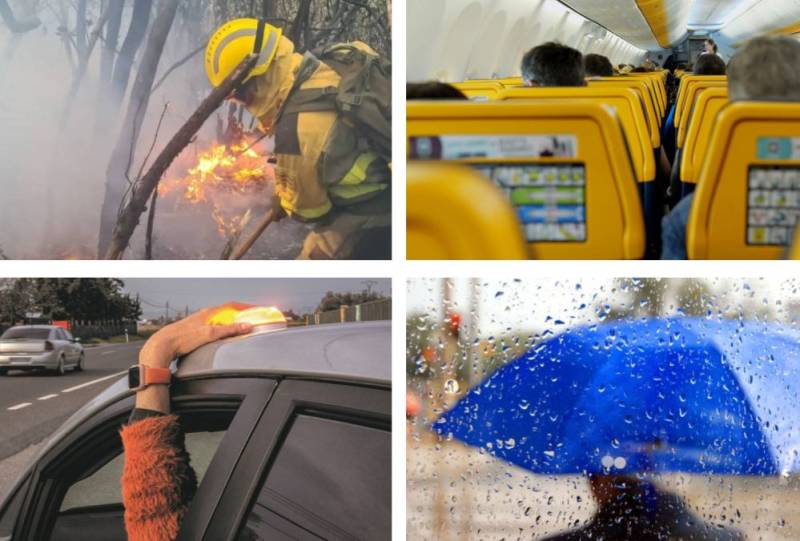

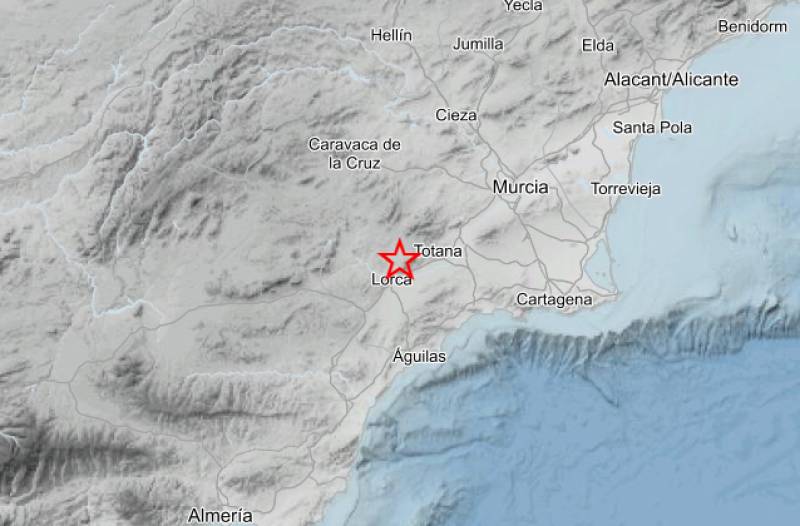











 The year began on a sombre note with the discovery of the decomposed body of John George, a 37-year-old man from Northern Ireland, in a rural area of Rojales in Alicante province. He had been missing since mid-December 2024 and the case quickly became an international homicide investigation involving both Spanish and UK authorities. Multiple international arrest warrants were issued for the suspected killer, who remains at large a year later.



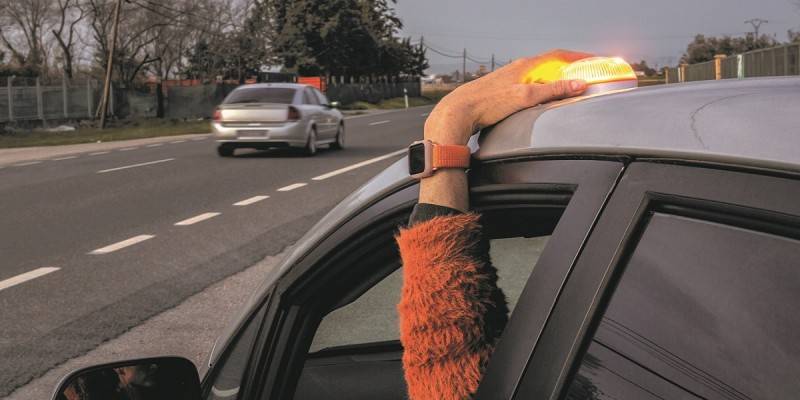 And finally, looking ahead, what can we expect from the news cycle in 2026? Well, to start with, from January 1, drivers will be required to carry a V-16 emergency beacon instead of warning triangles (if you haven’t got one yet, you’d better hurry up!) and electric scooter riders will be forced to get mandatory insurance (like that will actually be enforced, the same as the helmet and high-vis jackets currently are).