Guidelines for submitting articles to La Torre Golf Resort Today
Hello, and thank you for choosing La Torre Today.com to publicise your organisation’s info or event.
La Torre Golf Resort Today is a website set up by Murcia Today specifically for residents of the urbanisation in Southwest Murcia, providing news and information on what’s happening in the local area, which is the largest English-speaking expat area in the Region of Murcia.
When submitting text to be included on La Torre Golf Resort Today, please abide by the following guidelines so we can upload your article as swiftly as possible:
Send an email to editor@spaintodayonline.com or contact@murciatoday.com
Attach the information in a Word Document or Google Doc
Include all relevant points, including:
Who is the organisation running the event?
Where is it happening?
When?
How much does it cost?
Is it necessary to book beforehand, or can people just show up on the day?
…but try not to exceed 300 words
Also attach a photo to illustrate your article, no more than 100kb
PROPERTY SEARCH
article_detail
Date Published: 26/01/2026
Drug trafficking in Andalucía: A hydra that keeps growing despite record arrests
Police seizures are rising, but cocaine and hashish are more available than ever as criminal networks adapt and expand
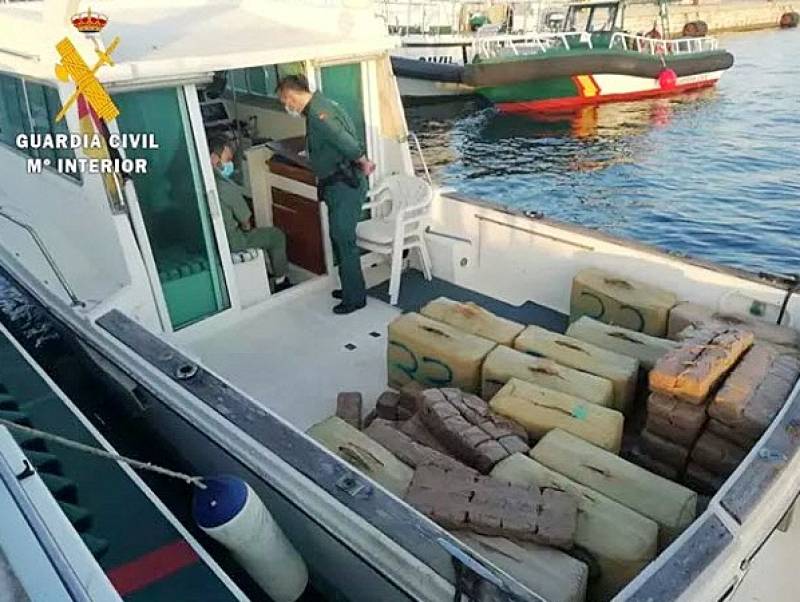
Despite thousands of arrests each year and ever larger drug seizures, drug trafficking in Andalucía continues to grow, becoming more profitable, more violent and harder to dismantle. Judges, prosecutors and police increasingly describe the problem as a multi-headed hydra: cut off one route or group, and others quickly take its place.
According to figures from the Ministry of the Interior, around 7,000 people are arrested every year in Andalucía for drug-related offences. Yet prosecutors and police agree that enforcement alone is not slowing the business. There is more cocaine on the market, prices remain low and profits are soaring.
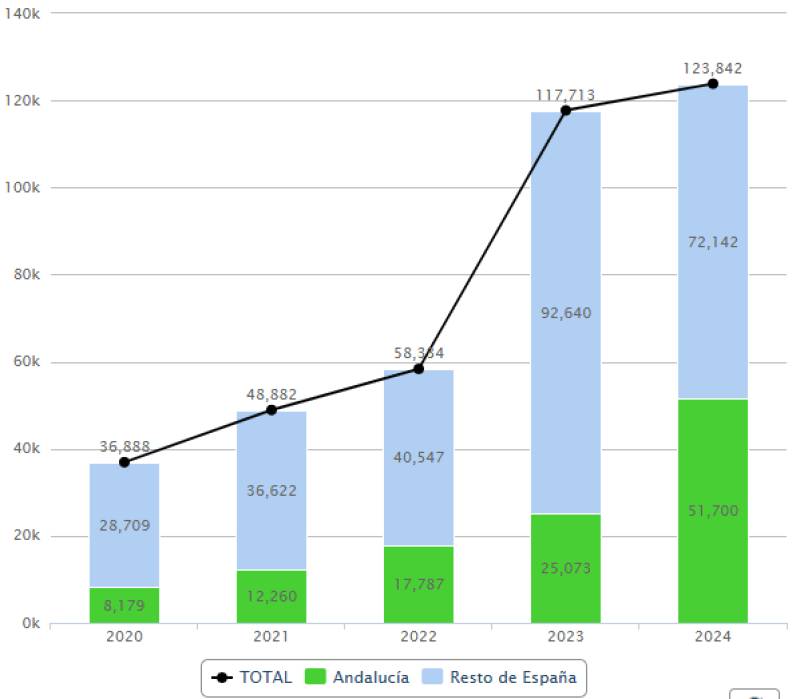
Cocaine Seizures
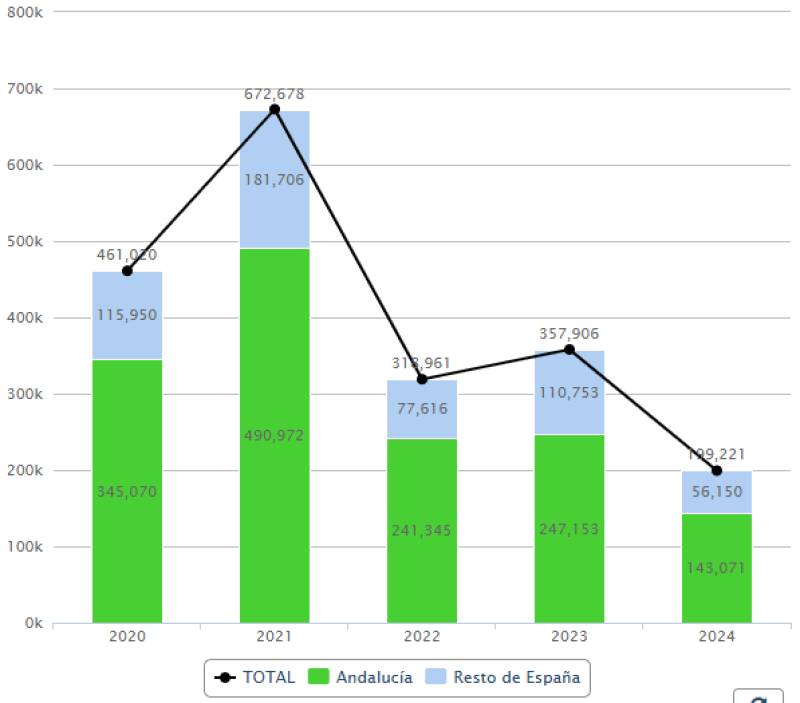
Hashish Seizure
Official data shows why. In 2024, 70% of all hashish seized in Spain and 40% of cocaine seizures occurred in Andalucía, confirming the region as one of Europe’s main entry points for drugs. The European Drug Agency warns that high-risk criminal networks now dominate cocaine trafficking, generating billions of euros in profits and operating through highly flexible international structures.
That profitability is reflected in consumption. Spending on narcotics in Spain exceeded €8 billion in 2023, roughly comparable to national spending on fruit and higher than footwear. As long-time Campo de Gibraltar anti-drugs campaigner Francisco Mena explains, “the low price of cocaine implies a large availability of this substance.”
Europol warns that cocaine production in Latin America has reached unprecedented levels, ensuring a steady flow into European markets. With demand holding firm, trafficking remains “a highly profitable activity” for criminal organisations. The agency also estimates that only around 2% of criminal profits are ever recovered, a weakness that allows organised groups to reinvest and expand. As Europol notes, “money laundering is a key factor for criminal enterprises, allowing them to integrate illegal profits into the legal economy.”
Prosecutors in Andalucía are particularly concerned about the concentration of powerful criminal organisations in Málaga province. According to the Anti-Drug Prosecutor’s Office, Málaga and Marbella are a main focus for sophisticated national and foreign gangs involved in drug trafficking and complex financial laundering operations. Investigations there have uncovered links to Albanian and Chinese networks operating across multiple countries.
Algeciras, meanwhile, remains another critical hotspot. Its strategic port and proximity to the Strait of Gibraltar make it a key gateway for hashish and cocaine entering Europe, with prosecutors reporting sustained pressure on both trafficking and money laundering cases.
The scale of the problem is also reflected in consumer data. Spending on narcotics in Spain exceeded €8 billion in 2023, roughly comparable to national spending on fruit and higher than footwear. As one long-time anti-drugs campaigner in Campo de Gibraltar, Francisco Mena, put it, “the low price of cocaine implies a large availability of this substance.”
Violence is also escalating. Prosecutors report a worrying rise in firearms seizures, including automatic weapons, and an increase in attacks on Guardia Civil officers. As one civil guard spokesperson warned, “the mafias are making more money every year and becoming more powerful.”
For prosecutors, this open defiance of the state represents a serious challenge. Drug trafficking in Andalucía is no longer hidden. It is visible, brazen and deeply rooted, and dismantling it will require not only police action, but sustained legal, financial and social pressure on the networks behind it.
Images: Guardia Civil/Archives and INE (National Institute of Statistics)
















 Despite thousands of arrests each year and ever larger drug seizures, drug trafficking in Andalucía continues to grow, becoming more profitable, more violent and harder to dismantle. Judges, prosecutors and police increasingly describe the problem as a multi-headed hydra: cut off one route or group, and others quickly take its place.