Date Published: 17/07/2026
Passenger almost sucked from Ryanair jet after window shatters. Could it happen on a Spain flight?
The terrifying Ryanair incident has left many holidaymakers wondering whether the same thing could happen on a flight to or from Spain
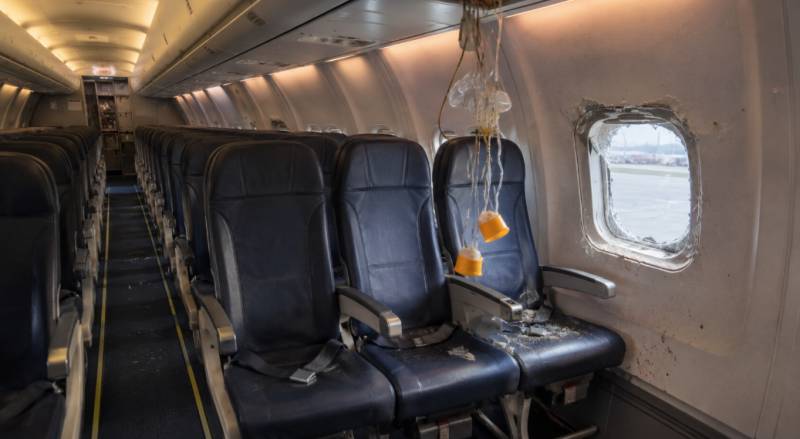
Image: Artistic representation of the damage
A passenger was nearly sucked from a Ryanair plane after a window shattered at 30,000 feet, triggering one of the most frightening emergencies imaginable for anyone who flies regularly.
The terrifying incident has left many travellers asking the same question as they head off on holiday this summer: could something like this happen on a flight to or from Spain?
The incident happened on a Ryanair flight operated by Malta Air travelling from Thessaloniki in Greece when a window was damaged during the flight, causing a sudden loss of cabin pressure. Passenger Ljubisa Karović was sitting beside the shattered window and was reportedly almost pulled from the aircraft as air rushed out of the cabin.
The dramatic images quickly spread across social media and news outlets, leaving many holidaymakers wondering whether the same thing could happen on one of the thousands of flights carrying passengers to and from Spain every day.
According to aviation experts, the simple answer is that it's possible, but incredibly unlikely. Yeah, tell that to Mr Karović.
Investigators are still working to establish exactly what happened, but early assessments suggest the incident may have started with a failure in the aircraft's right engine. Specialists believe fragments from the damaged engine could have struck the window, leading to the loss of cabin pressure.
As alarming as that sounds, experts stress that several unusual events appear to have occurred in sequence to create the emergency.
Many people have also questioned why Mr Karović was not completely pulled out of the aircraft. Aviation specialists explained that a number of factors worked in his favour.
Most importantly, he was wearing his seatbelt. The strongest rush of air happens in the first moments after pressure is lost, but that force quickly reduces as the pressure inside and outside the aircraft begins to equalise. Commercial aircraft windows are also relatively small, making it difficult for an adult to pass completely through the opening.
Although incidents like this attract worldwide attention when they happen, they remain exceptionally rare.
Experts pointed to a similar tragedy in 2018 when a Southwest Airlines flight travelling between New York and Dallas suffered an engine failure that shattered a window. A passenger was partially pulled from the aircraft and later died from her injuries despite the efforts of fellow travellers who managed to pull her back inside.
More recently, in January 2024, an Alaska Airlines Boeing 737 MAX made headlines when a panel covering a door detached during flight. Fortunately, nobody was sitting in the seats directly beside the opening and there were no fatalities.
Mr Karović survived the latest incident but remains in hospital recovering from his injuries. According to his wife, he suffered injuries to one hand, bleeding from his nose and mouth, friction burns and significant psychological trauma.
Experts explained that the greatest danger in these situations is usually faced by passengers sitting immediately next to the opening, particularly if they are not wearing a seatbelt. Other passengers are generally protected by the aircraft's seating structure and because the force of the escaping air is concentrated around the damaged area.
That's one reason aviation professionals continue to repeat the same advice given before every flight. Even when the seatbelt sign is switched off, keeping your belt loosely fastened whenever you're seated can make a significant difference during an unexpected emergency.
Despite the frightening nature of the Ryanair incident, aviation experts remain keen to put the risk into perspective. Millions of people fly safely to and from Spain every year without experiencing anything more dramatic than a patch of turbulence or a delayed departure.
article_detail

|
Read more articles about Corvera Airport, Murcia